Syllabus & Goals 3 min
Cambridge 5.2 · Digital currency Paper 1 · Computer Systems
By the end of this lesson you can:
- Describe what digital currency is and how it is used, compared with fiat currency.
- Describe how cryptocurrency differs from centrally controlled digital currency.
- Explain how blockchain records and protects digital currency transactions.
Textbook: Chapter 5, §5.2.1–5.2.2 (pp. 186–189)
Recap / Warm-Up 5 min
Lessons 1–3 covered how the web works. The internet also moves money. In Unit 2 you met encryption; today's blockchain builds on similar cryptography.
Quick starter
When you pay for a snack by tapping a phone, does any physical money move? Where is the money really?
Reveal the answer
No coins or notes move. The money exists only as data in bank computer systems. The payment changes numbers in two accounts — that is digital currency at work.
Key Concept 14 min
1 · Digital currency
Digital currency exists purely in digital form. It has no physical form, unlike fiat currency such as $, £, € and ¥. ("Fiat" is Latin for "let it be done": ordinary money is backed by governments and banks, not by gold.)
Digital currency is accepted as payment for goods and services. It moves between accounts, just like card payments. It makes online banking, online payment services and phone payment apps possible. It can be turned back into physical cash when needed.
Traditional digital currency relies on a central banking system. When Sam pays Alex, the money passes from Sam's bank, through a central bank, to Alex's bank. Central banks and governments regulate every transaction and set exchange rates. The weakness of this centralisation is keeping transactions confidential and secure.
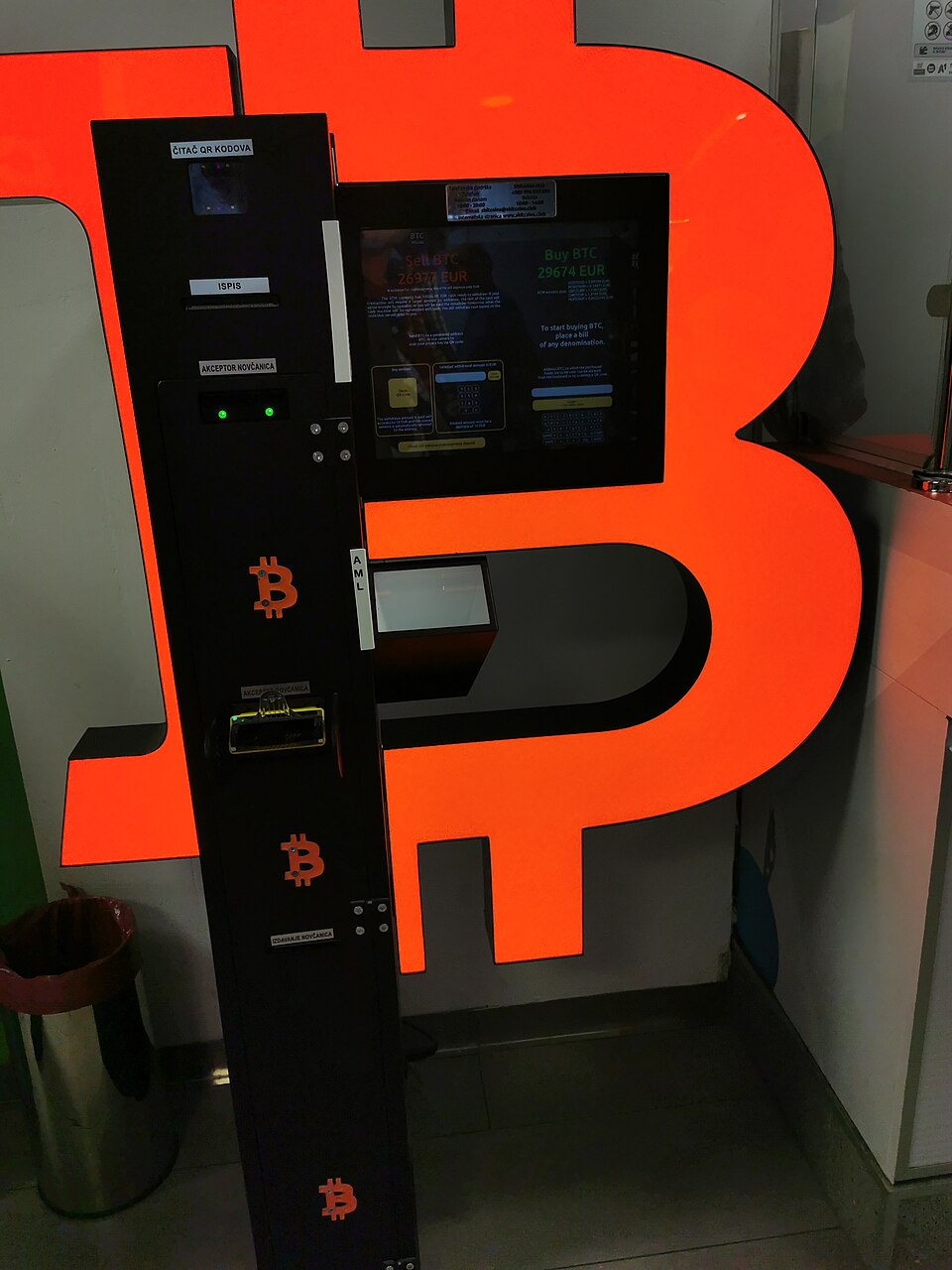
2 · Cryptocurrency: decentralised digital currency
- Uses cryptography to track transactions.
- Has no state control: the cryptocurrency community sets the rules, not a central bank.
- Transactions are publicly available, so all of them can be tracked and the money in the system monitored.
- Works inside a blockchain network, which makes it much more secure.
3 · Blockchain
A blockchain is a decentralised database of all the transactions made by its network members. It is a network of interconnected computers with no central server. Every computer holds all the transaction data.
When a new transaction happens, every computer receives a copy. So a record cannot be changed without the agreement of all the members. A new user who joins receives a copy of the whole blockchain.
Each new transaction creates a new block holding three things:
- Data — for example, sender, recipient and amount.
- A hash value — a unique value made by an algorithm (usually SHA-256). It acts as the block's fingerprint and includes a timestamp of when the block was made.
- The previous hash value — the hash of the block before, which links the chain together.
The first block has no block before it. It is called the genesis block.
4 · Why tampering fails
Suppose a hacker edits the data in block 3. Any change to a block's data changes its hash. Block 4 still stores the old hash as its previous hash, so the link breaks. Block 4 and every block after it become invalid.
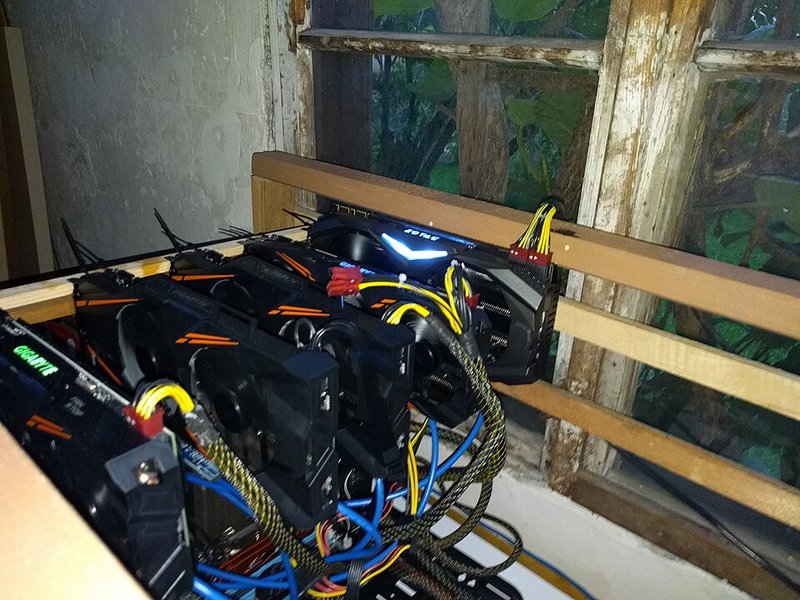
Could a fast computer rebuild all the later blocks quickly? Proof-of-work stops this. It makes each new block take about ten minutes to confirm. Special users called miners do this work and earn a commission for each block. Every new block is sent to all computers and checked before it is added.
Worked Example 12 min
(a) Check a chain link by link
Question: the table shows a blockchain stored on one computer. Is it valid? If not, which blocks are invalid?
| Block | Data | Hash | Previous hash |
|---|---|---|---|
| 1 | genesis | 0A11 | 0000 |
| 2 | Ana → Ben $40 | 7C2E | 0A11 |
| 3 | Ben → Cy $15 | F904 | 7C2E |
| 4 | Cy → Dev $9 | 2B6D | F940 |
| 5 | Dev → Ana $3 | C5A8 | 2B6D |
- Block 1: previous hash 0000 — it is the genesis block. the first block points to nothing.
- Block 2: previous hash 0A11 = hash of block 1 ✓. each link is checked by comparing two values.
- Block 3: previous hash 7C2E = hash of block 2 ✓.
- Block 4: previous hash F940 but block 3's hash is F904 ✗. the digits are swapped — close is not equal.
- So the chain breaks between blocks 3 and 4. Block 4 and block 5 are invalid. block 5 depends on block 4, so it cannot be trusted either.
- The network rejects this copy. The other computers still hold the correct chain. decentralisation means one bad copy changes nothing.
(b) One payment, two systems
Scenario: Sam sends Alex $20. Compare the two routes.
Traditional digital currency
- Sam's bank (X) checks his balance.
- The payment goes through the central banking system.
- Alex's bank (Y) adds $20 to her account.
- Banks and governments regulate the transfer; the details stay private to the banks.
Cryptocurrency on a blockchain
- Sam's wallet announces the transaction to the network.
- A new block is created: data, hash (with timestamp), previous hash.
- Miners complete the proof-of-work (about ten minutes).
- Every computer checks the block and adds it to its copy; the record is public.
How marks are earned in a "differences" question: pair the points — "central banks control it whereas crypto has no state control" (1), "bank records are private whereas crypto transactions are public" (1).
Try It Yourself 12 min
Goal: state the three items stored in every block of a blockchain, and name the first block.
Goal: draw a blockchain of seven blocks. Invent a four-digit hash for each and fill in each previous hash correctly. Then describe what happens if block 4 is hacked to change the amount of money.
Goal: a hacker has very fast computers. Explain why they still cannot simply rewrite blocks 4 to 7 before anyone notices.
Hint
Two separate barriers: how long each block takes to add, and how many computers hold a copy that would all need changing at once.
📝 Exam Practice 10 min
Describe how digital currency differs from fiat currency.
Mark scheme
- Digital currency exists only in electronic / digital form / as data (1).
- Fiat currency has a physical form (notes and coins) / is issued and backed by governments and banks (1).
Describe what is stored in each block of a blockchain.
Mark scheme
- Data about the transaction, e.g. sender, recipient, amount (1).
- A (unique) hash value for the block / includes a timestamp (1).
- The hash value of the previous block, linking it to the chain (1).
Customers buy goods from a company using a cryptocurrency. Explain how blockchain could protect the company and its customers from hackers.
Mark scheme
Any four from:
- Blockchain is a decentralised database / no central server to attack (1).
- Every computer in the network holds a copy of all transactions (1).
- A change would need the consent of all network members / all copies changed at once (1).
- Each block holds the previous block's hash, so blocks are linked (1).
- Changing a block changes its hash, breaking the chain / making later blocks invalid (1).
- Proof-of-work slows the creation of blocks (about ten minutes each), so a chain cannot be rebuilt quickly (1).
- New blocks are checked by every computer / miners before being added (1).
A blockchain has seven blocks. Explain what would happen if the data in block 4 was altered.
Mark scheme
- The hash value of block 4 would change (1).
- Block 5's previous hash would no longer match / the chain is broken (1).
- Blocks 5, 6 and 7 become invalid / the transaction is rejected / tampering is detected (1).
Recap & Key Terms 3 min
Digital currency is money held only as data. Traditional versions are centralised through banks. Cryptocurrency is decentralised and public, and runs on a blockchain. Each block holds data, its hash and the previous hash, so any edit breaks the chain. Proof-of-work stops a quick rebuild.
- Digital currency
- Currency that exists in electronic form only; it has no physical form and is essentially data on a database.
- Cryptocurrency
- A form of digital currency that uses a chain of decentralised computers to control and monitor transactions.
- Cryptography
- The protection of data by use of coding; it usually involves encryption and decryption.
- Blockchain
- A decentralised database where all transactions are stored; interconnected computers with no central server.
- Timestamp
- A digital record of the date and time that a data block is created.
- Proof-of-work
- The algorithm used to confirm transactions and produce new blocks; miners complete it for a reward.
Homework 1 min
Task (≤ 15 min): explain two differences between traditional digital currency and cryptocurrency. [4]
Model answer
- Traditional digital currency is regulated by central banks and governments (1)…
- …whereas cryptocurrency has no state control; its rules are set by its community (1).
- Traditional transactions are private to the banks involved (1)…
- …whereas cryptocurrency transactions are public / stored on every computer in the blockchain, so they can be tracked (1).