🎯 Syllabus & Goals 3 min
Cambridge 6.3 · Artificial intelligence (AI) Paper 1 · Computer Systems
By the end of this lesson you can:
- Define artificial intelligence and the term cognitive.
- Describe the main characteristics of AI: data and rules, reasoning, learning and adapting.
- Explain real examples of AI — smart assistants, chatbots, facial expression recognition — and tell AI apart from plain automation.
Textbook: Chapter 6, §6.3.1–6.3.2 (pp. 241–242).
Recap / Warm-Up 5 min
Lesson 4 warned that robotics and AI are almost separate fields. Most robots just repeat a program. AI is about something else: making a computer behave intelligently.
Quick starter
A welding robot repeats the same 40 moves on every car. Does it need AI? Why or why not?
Reveal the answer
No. Its task is repetitive and never changes. It follows stored instructions; it does not reason, learn or adapt.
🧠 Key Concept 14 min
1 · What is AI?
"Intelligent behaviour" means the brain's cognitive functions. These can be copied in a machine and measured against human benchmarks such as reasoning, speech and sight.
2 · The main characteristics of AI
The syllabus lists three. An AI system:
Reasoning example: an AI learns the facts for making the perfect cup of tea. It builds rules, then applies and adjusts them to make coffee or hot chocolate. That is deductive reasoning — building rules from correct facts, then using them on new problems. AI can also spot patterns humans miss and make predictions.
3 · Narrow, general and strong AI (textbook categories)
| Category | Textbook meaning | Example |
|---|---|---|
| Narrow AI | Better than a human at one specific task. | A chess program that beats grandmasters |
| General AI | Similar to (not better than) a human at a specific task. | A chatbot answering like a helpdesk worker |
| Strong AI | Better than a human at many tasks. | None exists yet |
4 · AI all around us
- News generation — articles written automatically from live news feeds.
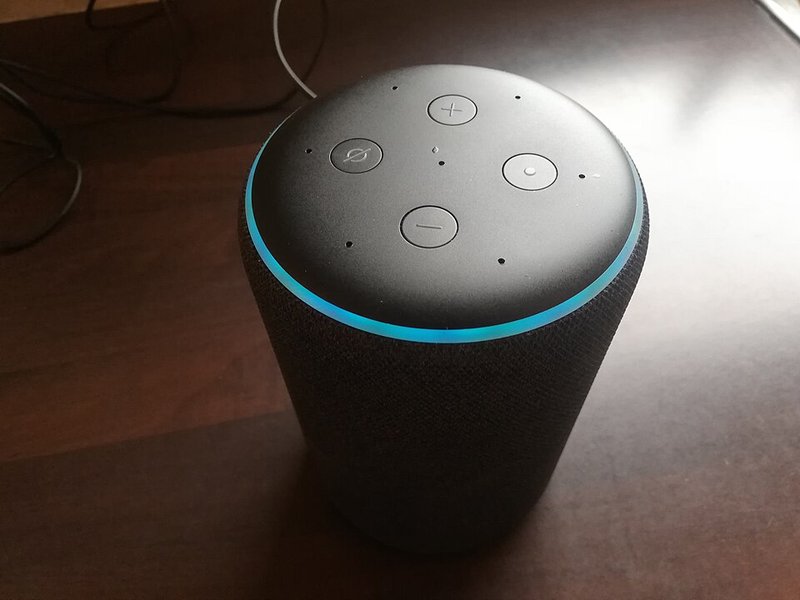
- Smart home devices — voice assistants that recognise commands and learn from their environment.
- Chatbots — reply to typed or spoken messages by copying patterns of human conversation.
- Autonomous cars — Lesson 5.
- Facial expression recognition — algorithms find key facial landmarks and map them to emotions.
5 · The AI family — what comes next
Worked Example 12 min
(a) Automated or AI? Apply the three characteristics
| System | Data + rules? | Reasons? | Learns / adapts? | Verdict |
|---|---|---|---|---|
| Greenhouse heater control | ✔ one fixed rule | ✘ just compares | ✘ never changes | Automated, not AI |
| Email spam filter | ✔ | ✔ judges each email | ✔ improves with new spam | AI |
| Voice assistant | ✔ | ✔ interprets a request | ✔ responses improve | AI |
| Pocket calculator | ✔ arithmetic rules | ✘ | ✘ | Neither — just a program |
- Look for a store of data and rules — almost every program has this.so this test alone never proves AI.
- Ask: does it reason — draw a conclusion about a new situation?a thermostat only compares one number.
- Ask: does it learn and adapt — does its behaviour improve with experience?this is the clearest sign of AI in exam answers.
(b) How a delivery chatbot handles a question
Shop helpdesk · chat
Bot: Hello! How can I help you today?
Customer: I ordered a textbook. When will it arrive?
Bot: Can you give me your order number, please?
Customer: AB123456.
Bot: Thanks! It is out for delivery and should arrive today.
- The chatbot recognises key words ("ordered", "when", "arrive") → the request is about delivery.it copies patterns of human conversation.
- A rule says: a delivery query needs an order number → it asks for one.data + rules.
- It looks up AB123456 and replies using the information it holds now.it responds using information known at the time.
- Customer feedback and many past chats help it phrase better replies next time.learning and adapting.
Try It Yourself 12 min
Goal: Which use AI? Automatic street lights · a chatbot · a music app that builds playlists from your listening · a digital clock · facial expression recognition.
Goal: Classify as narrow, general or strong AI (textbook meanings): a program better than any doctor at reading one type of scan; a machine better than humans at driving, cooking and translating; a helpdesk bot as good as a trained assistant.
Goal: An automatic door opens when a motion sensor detects someone. Explain why this is automated but not AI. Then describe changes that would make it an AI system.
Hint
It follows one fixed rule and never learns. An AI version might recognise faces, learn busy times of day and adapt how long it stays open.
📝 Exam Practice 10 min
Define the term artificial intelligence.
Mark scheme
- A branch of computer science (1)…
- …dealing with the simulation of intelligent (human) behaviour by computers / machines (1).
Describe the main characteristics of artificial intelligence.
Mark scheme
- A collection of data and the rules for using that data (1).
- The ability to reason / draw conclusions from the data (1).
- Can learn and adapt / change its own processes or data as a result of experience (1).
Explain how a smart home device uses AI to answer a spoken question.
Mark scheme
- The microphone captures the voice and it is converted to binary / digital data (1).
- The device recognises the verbal command (1).
- It processes / searches its data and outputs a verbal response (1).
- It learns from its environment and the data it receives, so its responses become more sophisticated (1).
Identify the category of AI (narrow, general or strong) described: (a) superior to a human in many tasks; (b) superior to a human at one specific task; (c) similar to a human at a specific task.
Mark scheme
- (a) strong AI (1) · (b) narrow AI (1) · (c) general AI (1).
🗝️ Recap & Key Terms 3 min
AI simulates intelligent human behaviour. It is data plus rules, with the ability to reason and to learn and adapt. Smart speakers, chatbots, driverless cars and emotion recognition all use it. Expert systems and machine learning are the two AI systems you study next.
- Artificial intelligence (AI)
- A branch of computer science dealing with the simulation of intelligent human behaviour by a computer.
- AI (textbook key term)
- A collection of rules and data giving a computer the ability to reason, learn and adapt to external stimuli.
- Cognitive
- The mental processes that acquire knowledge and understanding through thought, experience and the five senses.
- Reasoning
- The ability to draw reasoned conclusions from given data or situations.
- Chatbot
- A pop-up program on a website that appears to hold a meaningful conversation with a user.
- Narrow / general / strong AI
- Better than a human at one task / similar to a human at a task / better than a human at many tasks.
Homework 1 min
Task (≤ 15 min): Using one example of each, explain the difference between an automated system and an AI system. [4]
Model answer
- An automated system follows fixed, pre-programmed rules (e.g. compares a sensor reading with a stored value) (1).
- Example: garden lights switched on by a light sensor at dusk (1).
- An AI system can reason and learn / adapt its own rules or data from experience (1).
- Example: a spam filter or voice assistant that gets better the more it is used (1).