🎯 Syllabus & Goals 3 min
Cambridge 6.2 · Robotics — roles, advantages & disadvantages Paper 1 · Computer Systems
By the end of this lesson you can:
- Describe five roles of robots in agriculture, including drones and phenotyping.
- Describe how robots are used in medicine, the home and entertainment.
- Explain the advantages and disadvantages of robots in each of these sectors.
Textbook: Chapter 6, §6.2.3 (pp. 236–240) — agriculture, medicine, domestic and entertainment.
Recap / Warm-Up 5 min
Last lesson covered robots in industry and transport. Today completes the syllabus list of six sectors.
Quick starter
What does LiDaR stand for, and what does it build?
Reveal the answer
Light detection and ranging. It uses lasers to build a 3D image of the surroundings.
🧠 Key Concept 14 min
1 · Agriculture
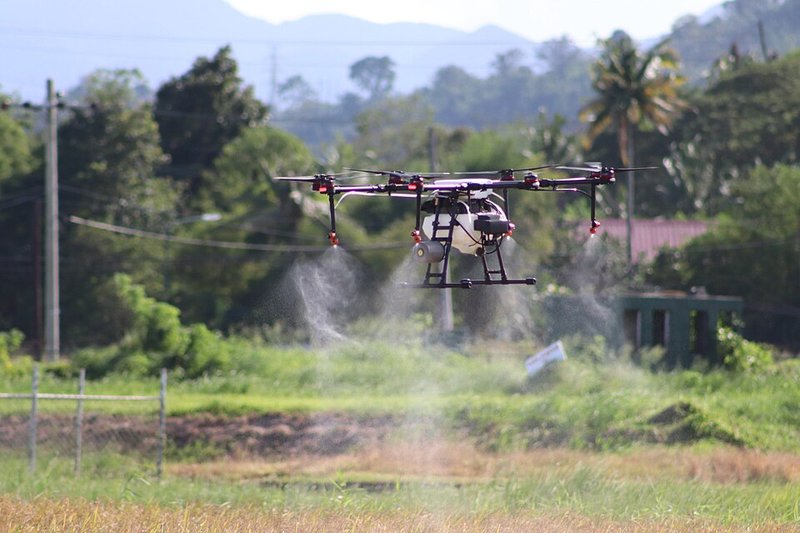
World population may reach nine billion by 2050. Farms must become more efficient. Robots take over slow, dull, repetitive jobs so farmers can focus on yields. Five areas:
| Area | How the robot works |
|---|---|
| Harvesting & picking | Cameras scan each crop (e.g. a lettuce) to decide if it is ready. A second camera guides a cutting arm to remove it without damage. Picks only ripe produce — higher yields, less waste. |
| Weed control | AI tells weed from crop. GPS keeps the robot on course along rows of vines. An actuator operates a weed-removal blade. A drone often maps the field first to plan the route. |
| Phenotyping | Observing a plant's physical features to judge its health and growth. Spectral sensors and thermal cameras build a 3D model; machine learning spots blight or wrong-coloured leaves. |
| Seed-planting & fertiliser drones | An aerial "bird's-eye view" guides accurate seeding and efficient fertiliser spreading. Drones can even seed clouds with silver iodide to make rain. |
| Autonomous devices | Mowers, weeders, pruners, harvesters, seeders and sprayers that use sensors and cameras to avoid obstacles — and can "go to sleep" in bad weather. |
Agricultural robots — advantages
- Faster, and more accurate (only ripe crops picked).
- Higher yields and less waste.
- Lower labour costs for dull, repetitive work.
- Less fertiliser and chemical waste.
- Problems (blight) predicted earlier than by eye.
Agricultural robots — disadvantages
- Expensive to buy, set up and maintain.
- Unemployment among farm workers.
- Needs technical skills; faults in remote areas.
- Bad weather or rough terrain can stop them.
2 · Medicine
3 · Domestic (home) robots
- Autonomous vacuum cleaners — proximity sensors and cameras avoid obstacles and cover the whole room; a microprocessor controls the device and lets the user program it; actuators drive the motors.
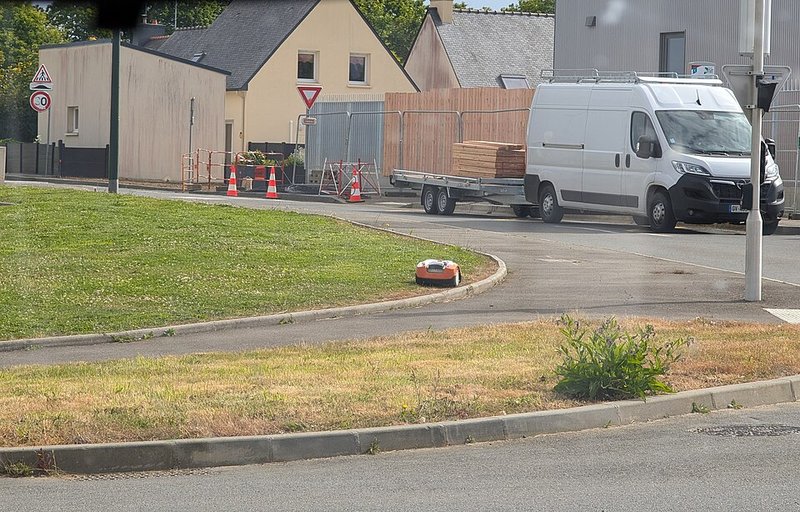
- Autonomous lawn mowers — the same sensor, camera, microprocessor and actuator set-up.
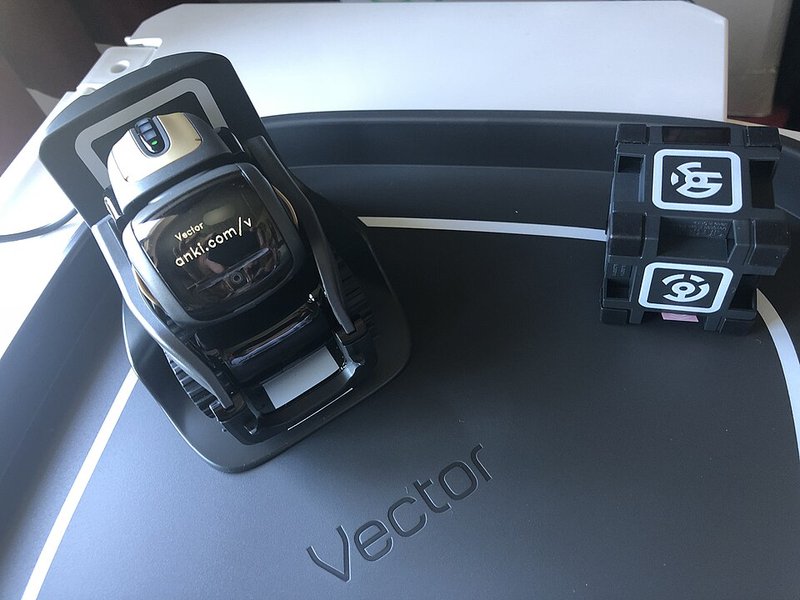
- Personal assistant robots — a microprocessor plus cloud connectivity; a microphone for voice commands; an HD camera for face recognition; proximity sensors and actuators to steer around objects.
4 · Entertainment
- Theme parks — autonomous robots dressed as characters interact safely with visitors.
- Music festivals — robots control lighting, lasers, visual effects and animation, all synchronised with the music.
- Film and TV — robots hold cameras steady and auto-focus; robot arms move actors and props (e.g. to fake floating in space).
- Stunts & effects — humanoid robots perform impossible stunts; effects and sound sync to within a millisecond.
Worked Example 12 min
(a) A robot vacuum meets a chair leg
Pseudocode · obstacle avoidance
CONSTANT MinGap ← 5
DECLARE Gap : INTEGER
DECLARE Finished : BOOLEAN
Finished ← FALSE
REPEAT
  // proximity sensor reading in cm
  INPUT Gap
  IF Gap < MinGap
    THEN
      OUTPUT "Stop motors"
      OUTPUT "Turn 90 degrees"
  ENDIF
  OUTPUT "Drive forward"
  INPUT Finished
UNTIL Finished = TRUE- Proximity sensor measures the gap: 4 cm.name the sensor type, not just "a sensor".
- Microprocessor compares with the stored minimum 5 cm: 4 < 5.the comparison with a stored value earns the mark.
- It signals actuators to stop the wheel motors, then turn.actuators = the wheel motors.
- It resumes its path and keeps reading the sensor.continuous monitoring closes the loop.
(b) A harvesting robot picks a lettuce
- Camera 1 scans the lettuce and sends images to the controller.sensing: the camera is the robot's sensor.
- The controller compares the image with stored examples of ripe lettuces: ready or not?this is why robots pick only ripe crops — less waste.
- If ready, camera 2 near the blade guides the arm into position.precision reduces damage.
- An actuator operates the cutting end-effector; the lettuce is removed from its stalk.the end-effector is the swappable cutting tool.
Try It Yourself 12 min
Goal: Name the sector for each robot: blood-sample robot · weed-removal robot · camera-steadying robot arm · robot mower · cloud-seeding drone · theme-park character robot.
Goal: Explain what phenotyping is, which sensors a phenotyping robot uses, and how machine learning helps it.
Goal: An autonomous underwater robot investigates a shipwreck at great depth. Describe how its sensors, cameras, microprocessor and actuators let it photograph the wreck and collect samples. Then give two advantages and two disadvantages of sending a robot rather than divers.
Hint
Pressure and proximity sensors, sonar or lights with cameras; thrusters and a gripper end-effector as actuators. Think danger, depth, cost and flexibility.
📝 Exam Practice 10 min
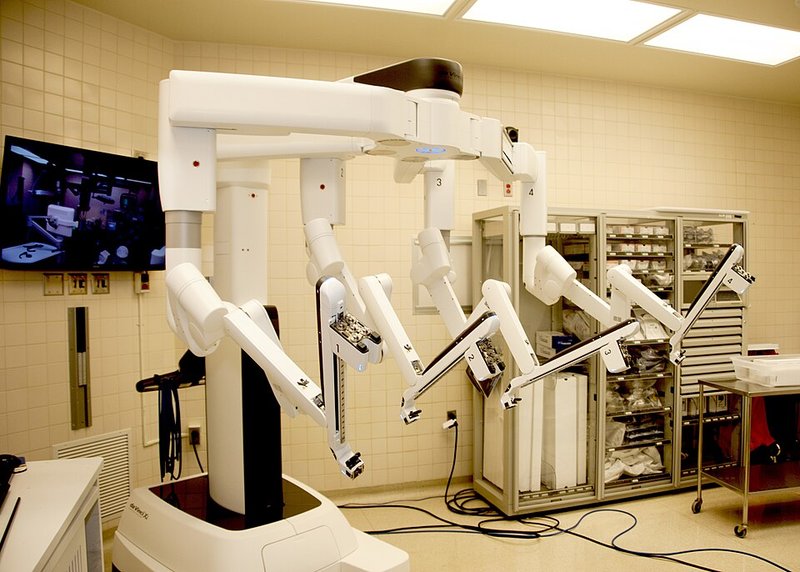
Describe four ways robots are used in medicine.
Mark scheme
- Any four (1 each): assisting/performing surgery · monitoring patients · disinfecting rooms/theatres · taking blood samples · microbots delivering targeted therapy · robotic prosthetic limbs.
A vineyard uses a robot to remove weeds between its rows of vines. Describe how the robot works.
Mark scheme
- A drone first surveys the field so a route can be programmed into the robot (1).
- GPS keeps the robot on course along the rows (1).
- Cameras and AI distinguish weeds from crop (1).
- The controller signals an actuator to operate a blade that removes the weed (1).
Explain two advantages and two disadvantages of using robots to harvest fruit.
Mark scheme
- Advantage: only ripe fruit picked, so less waste / higher yield (1).
- Advantage: faster, works long hours, lower labour costs (1).
- Disadvantage: expensive to buy and maintain (1).
- Disadvantage: unemployment of pickers / may be stopped by bad weather or terrain (1).
State two uses of robots in the film industry.
Mark scheme
- Any two (1 each): steadying / auto-focusing cameras · moving actors or props · performing stunts · producing synchronised special effects.
🗝️ Recap & Key Terms 3 min
Farm robots harvest, weed, phenotype, seed and spray. Medical robots operate, disinfect and take blood. Home robots clean, mow and assist. Entertainment robots perform, film and synchronise effects. All use sensors, a controller and actuators.
- Phenotyping
- Observing a plant's physical characteristics to assess its health and growth.
- Drone
- A flying robot, autonomous or remote-controlled, used for reconnaissance, deliveries or crop spraying.
- Microbot
- A microscopic robot that delivers a drug or therapy to one specific site in the body.
- Proximity sensor
- A sensor that detects how close an object is — used by robot vacuums and mowers to avoid obstacles.
- Prosthetic limb
- An artificial limb; modern ones are robots in their own right (they sense, move and are programmable).
Homework 1 min
Task (≤ 15 min): Describe how an autonomous vacuum cleaner cleans a room without hitting furniture [4], and give one advantage and one disadvantage of owning one [2].
Model answer
- Proximity sensors / cameras detect obstacles (1).
- The microprocessor compares the distance with a stored minimum (1).
- It signals actuators to stop / turn the wheel motors (1).
- It follows a programmed path to cover the whole room, checking sensors continuously (1).
- Advantage: saves the owner time / works while they are out (1).
- Disadvantage: expensive / can get stuck on cables or miss corners (1).