🎯 Syllabus & Goals 3 min
Cambridge 3.1 · Computer architecture — cores, cache, clock; embedded systems Paper 1 · Computer Systems
By the end of this lesson you can:
- Explain how clock speed, number of cores, cache size and bus width affect CPU performance.
- Describe the risks of overclocking and why more cores do not scale perfectly.
- Describe an embedded system, identify examples, and give its benefits and drawbacks.
Textbook: Chapter 3, §3.1.3 Cores, cache and internal clock (pp. 80–82) and §3.1.5 Embedded systems (pp. 83–87)
Recap / Warm-Up 5 min
Last lesson the CPU ran each instruction through a fetch–decode–execute cycle. Today asks: how can we get more cycles done each second — and where else do CPUs hide?
Quick starter
Which part of the CPU sends out the timing pulses that keep every operation in step?
Reveal the answer
The system clock. Its pulses travel on the control bus. The number of pulses per second is the clock speed.
🧠 Key Concept 14 min
1 · Clock speed
The clock sets the clock cycle that synchronises all operations. Clock speed is measured in hertz. A typical CPU runs at 3.5 GHz: 3.5 billion cycles every second. A faster clock means more cycles per second, so potentially faster processing.
2 · Overclocking
Overclocking means running the clock faster than the manufacturer designed it for. It is done by changing settings in the BIOS. It can boost speed, but it carries two real risks:
Risk 1 — unsynchronised operations
An instruction may not finish before the next one is due. Operations fall out of step, so the computer becomes unstable and crashes frequently.
Risk 2 — overheating
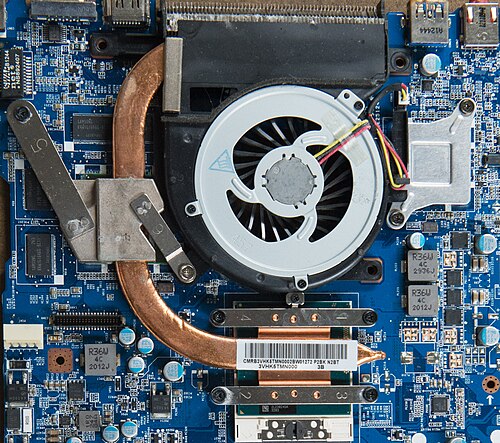
A faster clock makes the CPU produce more heat. Serious overheating leads to unreliable performance and can damage the chip.
3 · Cache memory
Cache is a small, very fast memory inside the CPU. It stores the instructions and data used most often. Because it is on the chip, the CPU can reach it much faster than RAM.
4 · Cores
A core is one complete processing unit: an ALU, a control unit and registers. A dual-core CPU has two cores and a quad-core CPU has four. More cores can work on different tasks at the same time, without pushing the clock speed higher.
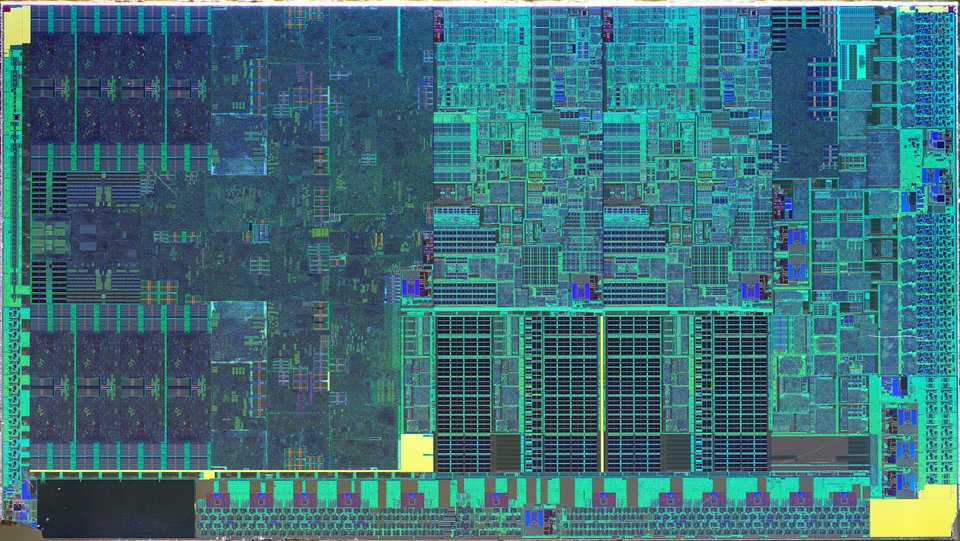
Doubling the cores does not double performance. The CPU must communicate with each core, and these communication channels use up some of the gain.
| Factor | Change | Effect on performance | The catch |
|---|---|---|---|
| Clock speed | Increase (e.g. 2.5 → 3.5 GHz) | More FDE cycles per second | Overclocking: crashes, overheating |
| Cache size | Increase | More data found without going to RAM | Cache is expensive, so it stays small |
| Number of cores | Increase (dual → quad) | Tasks run in parallel | Communication channels reduce the gain |
| Bus width | Wider address / data bus | More memory addressed; larger word moved per transfer | — |
5 · Embedded systems
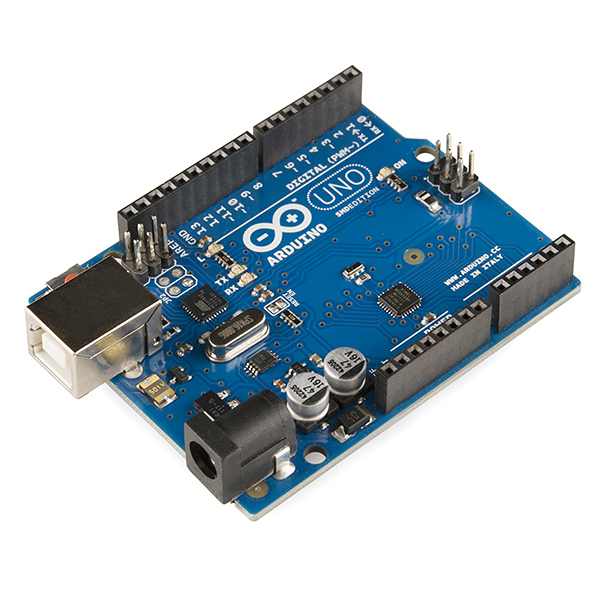
An embedded system is built around one of three kinds of chip:
Microcontroller
A CPU plus RAM, ROM and other peripherals, all on one chip. Together they carry out one task.
Microprocessor
An integrated circuit with only a CPU on it. RAM, ROM and peripherals must be added separately.
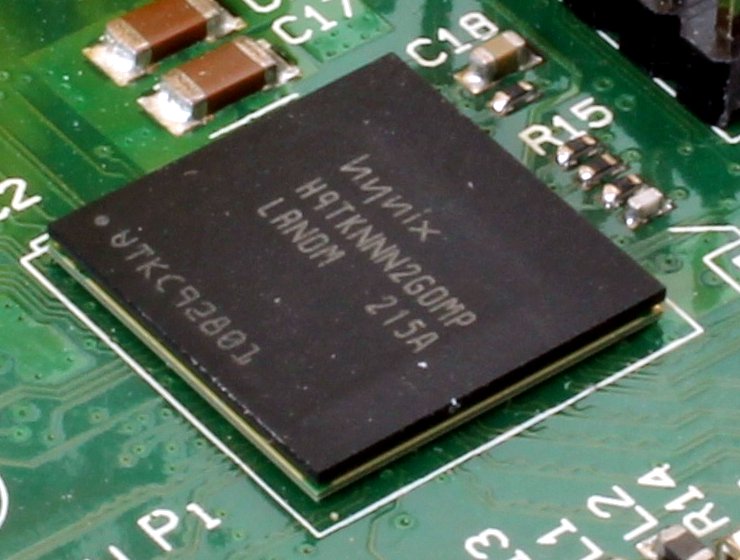
System on chip (SoC)
May include a microcontroller. Almost always has the CPU, memory, I/O ports and secondary storage on a single chip.
Updating an embedded system
Non-programmable devices usually have to be replaced to get new software. Programmable devices can be updated in two ways:
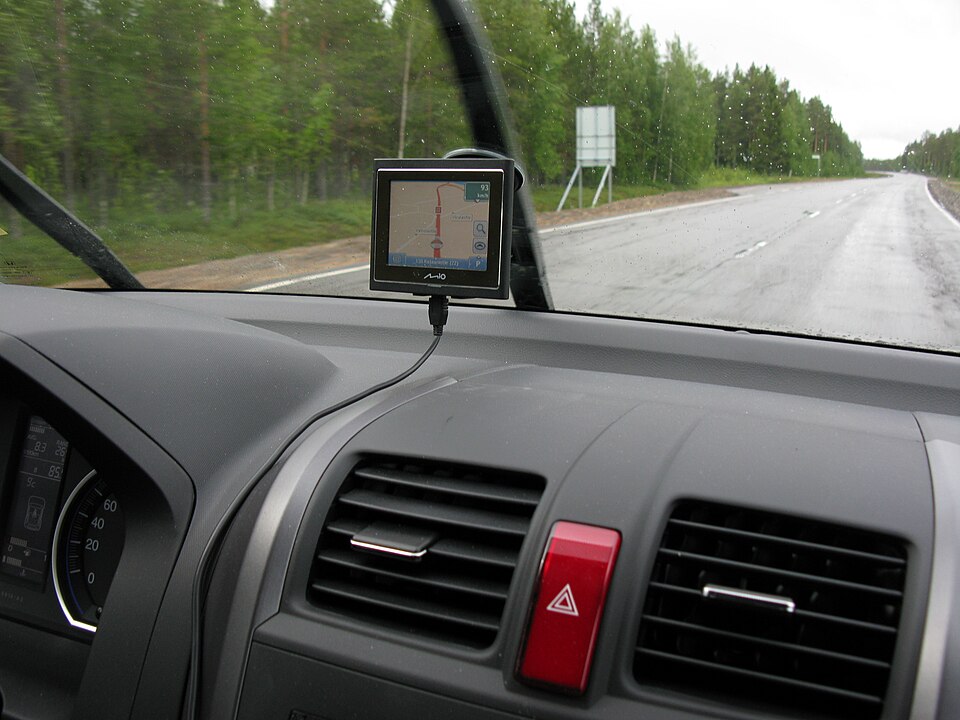
- by connecting to a computer and downloading the update (e.g. new maps for a car's GPS unit);
- by automatic updates over Wi-Fi, satellite or a mobile phone network (e.g. a car's engine management software).
Benefits
- Small, so they fit easily into devices.
- Relatively cheap to make; mass production brings reliability.
- Dedicated to one task: simple interface, often no OS needed.
- Use very little power.
- React very fast to changing inputs (real time).
- Can be controlled remotely, e.g. from a phone.
Drawbacks
- Hard to upgrade to take advantage of new technology.
- Finding faults is a specialist task.
- A "simple" interface can be confusing (e.g. setting a cooker clock).
- Internet-connected devices are open to hackers and viruses.
- Often thrown away rather than repaired — wasteful, feeding a "throw-away" society.
Where embedded systems are found
| Device | Inputs | What the embedded system does / outputs |
|---|---|---|
| Motor car | Sensors: oxygen level, fuel pressure, wheel speed | Controls fuel injection, ABS braking, airbags, traction control, exhaust emissions, GPS, entertainment, security |
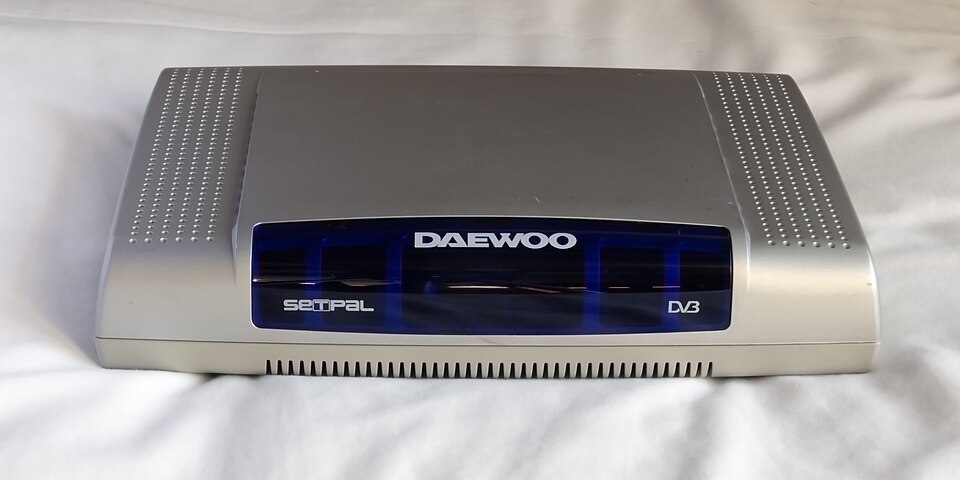
| Set-top box | Remote control, front panel, satellite/cable/aerial signal | Decodes the signal; records and plays back programmes from its SSD; HDMI output |
| Security system | Keypad code; temperature, pressure, acoustic sensors | Compares readings with stored settings; flashes lights, sounds an alarm, messages the owner |
| Office lighting | Time/day, movement, light sensors | Dims lights when unoccupied or sunny; restores them when people move; controls each smart bulb |
| White goods (washing machine, microwave, fridge) | Keypad or dial: temperature, wash cycle, cooking time | Carries out the whole programme without further human input; can be run from a phone |
Worked Example 12 min
(a) Which laptop performs better?
- Clock: A completes 3.5 × 10⁹ cycles per second; B completes 2.5 × 10⁹ per core.1 GHz = one billion (10⁹) cycles each second.
- So each of A's cycles lasts 1 ÷ 3.5 × 10⁹ ≈ 0.29 ns; each of B's lasts 0.4 ns.a shorter cycle means one core steps through instructions faster.
- Cores: B has 4 cores, which need 6 communication channels; A has one core and no channels.B can run several tasks at once, but not four times as fast.
- Cache: B's cache is 8 ÷ 2 = 4 times larger.more frequently used data stays on the chip, so fewer slow trips to RAM.
- Conclusion: for one simple task A may be quicker. For many tasks at once (video call + browser + music), B is likely to perform better.clock speed alone never decides performance — this is exactly the textbook's point.
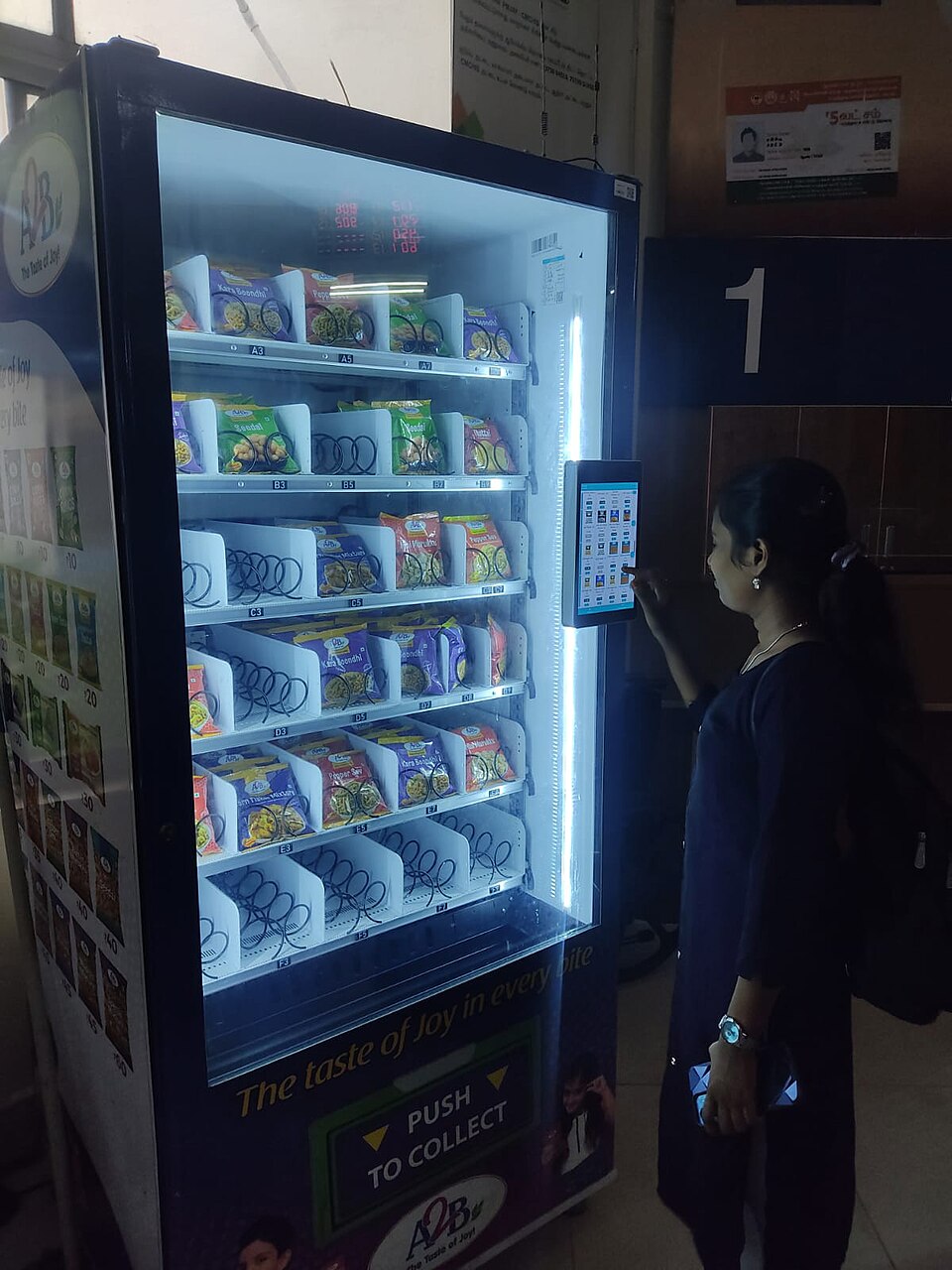
(b) Analyse a vending machine as an embedded system
- Identify the controller: a microcontroller at the heart of the machine.one chip with CPU, RAM and ROM — ideal for one dedicated job.
- List the inputs: keypad (item choice); coin sensor (counts money); temperature sensor; tilt sensor (tampering); gate/position sensors (is a row empty?).split manual inputs from automatic sensor inputs.
- Processing: check enough money has been entered for the chosen item, and compare temperature with the stored value.the controller decides; sensors only measure.
- Outputs: actuators turn motors to rotate the helix; the cooling pump switches on if too warm; an LCD shows price and change; a wireless modem sends sales data to the operator.each output is a signal sent by the controller.
- Benefit: the operator sees remote sales data and knows when to refill — no need to visit every machine.examiners reward a benefit tied to the scenario, not a generic one.
Try It Yourself 12 min
Goal: Sort into "embedded system" or "not embedded": microwave oven, desktop PC, digital camera, games laptop, traffic lights, washing machine, set-top box, tablet computer.
Goal: A CPU runs at 4.2 GHz. How many clock cycles does it complete in one minute? Then explain two reasons why overclocking it to 5.0 GHz could be a bad idea.
Goal: A car's GPS unit is controlled by a microcontroller. Describe its inputs and outputs, then explain two ways its maps could be updated without visiting a garage.
Hint
Inputs: satellite signals, touch-screen destination, car speed. Outputs: map display, spoken directions. For updates, think "plug into a computer" versus "automatic over a wireless link".
📝 Exam Practice 10 min
Explain how clock speed, cache size and the number of cores can each affect the performance of a CPU.
Mark scheme
- Clock speed: the number of (FDE) cycles per second (1)…
- …a higher clock speed means more instructions processed per second (1).
- Cache: fast memory inside / close to the CPU storing frequently used data/instructions (1)…
- …a larger cache means fewer (slower) accesses to RAM, so faster processing (1).
- Cores: each core can process instructions independently / in parallel (1)…
- …more cores can increase performance, but not proportionally because of communication between cores (1).
Describe two problems that overclocking a CPU could cause.
Mark scheme
- Instructions may not complete before the next is due / operations become unsynchronised, so the computer crashes or is unstable (1).
- The CPU overheats, leading to unreliable performance / damage (1).
Describe what is meant by an embedded system, and give one example.
Mark scheme
- A combination of hardware and software (1)…
- …designed to perform a specific / dedicated task or set of functions, built into a larger device (1).
- Any valid example, e.g. washing machine, microwave, set-top box, vending machine, car engine management, security alarm (1). Not a PC/laptop.
Give two benefits and two drawbacks of controlling household devices with embedded systems.
Mark scheme
- Benefit (2), e.g. small size · low cost · low power consumption · fast / real-time response · simple interface · can be controlled remotely · reliable.
- Drawback (2), e.g. difficult to upgrade · specialist fault finding · open to hacking if online · devices thrown away rather than repaired · interface can be confusing.
🗝️ Recap & Key Terms 3 min
Performance depends on clock speed, cache, cores and bus width together. Overclocking risks crashes and overheating, and extra cores add communication overhead. An embedded system is dedicated hardware and software inside a device — small, cheap and low-power, but hard to upgrade.
- Clock cycle
- One pulse of the system clock; a 3.5 GHz clock produces 3.5 billion cycles a second.
- Overclocking
- Changing the system clock speed to a value higher than the factory / recommended setting.
- Cache
- Temporary memory (static RAM) inside the CPU that holds frequently used data and instructions to increase performance.
- Core
- A unit on a CPU made up of an ALU, a control unit and registers; a CPU may contain several cores.
- Dual core / quad core
- A CPU containing two / four cores.
- Embedded system
- A combination of hardware and software designed to carry out a specific set of functions.
- Microcontroller
- A single chip containing a CPU plus RAM, ROM and peripherals, used to carry out a specific task.
Homework 1 min
Task (≤ 15 min): A smart central-heating controller in a home is an embedded system. (a) Identify two inputs and two outputs. (b) Explain one benefit and one drawback of being able to control it over the internet. [6]
Model answer
- (a) Inputs (2), e.g. temperature sensor · keypad / dial for the target temperature · time/clock · commands from a phone app.
- Outputs (2), e.g. signal to switch the boiler / gas valve on or off · signal to the water pump · display of current temperature.
- (b) Benefit: the owner can switch the heating on remotely before arriving home (1), so the house is warm and energy is not wasted heating an empty home (1).
- Drawback: an internet-connected device can be hacked (1), so an attacker could change settings or gain access to the home network (1).