🎯 Syllabus & Goals 3 min
Cambridge 3.2 · Input and output devices Paper 1 · Computer Systems
By the end of this lesson you can:
- Name the sensors in the syllabus and choose the right one for an application.
- Explain the difference between a monitoring system and a control system, including feedback.
- Describe step by step how sensors, an ADC, a microprocessor and a DAC run a given application.
Textbook: Chapter 3, §3.2.3 (pp. 111–118) — sensors, monitoring and control applications.
Recap / Warm-Up 5 min
Lesson 9 met actuators, which turn signals into movement. Lesson 10 met the DAC, which turns digital data into a current. Today we add the input side: sensors.
Quick starter
A mercury thermometer reads "somewhere between 21 °C and 22 °C". Why can a computer not read it directly?
Reveal the answer
Temperature is analogue — it varies continuously, with infinitely many possible values. A computer only handles discrete digital values, so the reading must be converted first (by an ADC).
🧠 Key Concept 14 min
1 · What a sensor does
- Real-world data is analogue: it changes continuously.
- An ADC (analogue-to-digital converter) turns it into digital values the processor can use.
- To drive a motor or valve, the processor may need a DAC to turn its digital output back into analogue.
- Sensors send readings constantly. They do not "wait for a change". The processor analyses the data and decides.
2 · The sensor catalogue
| Sensor | What it measures / how | Example uses |
|---|---|---|
| Temperature | Signal changes as the temperature of the surroundings changes. | Central heating; chemical process; greenhouse. |
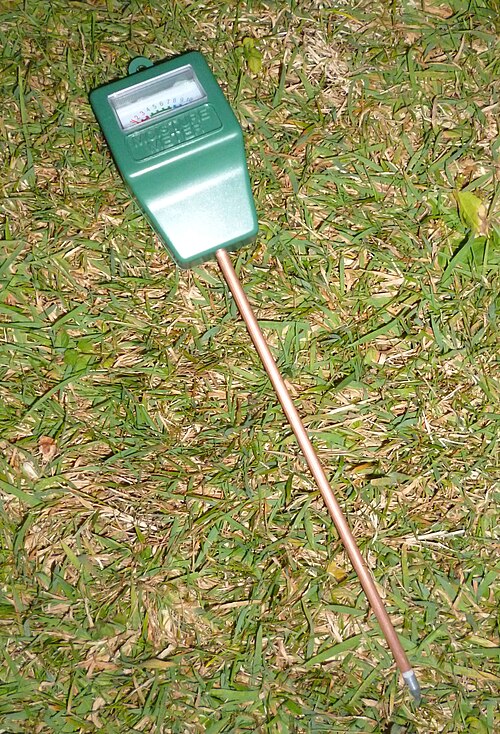
| Moisture | Measures water in e.g. soil, using the sample's electrical resistance. | Greenhouse soil; food-processing factory. |
| Humidity | Measures water vapour in air (air's conductivity changes with water). | Buildings; microchip factory; greenhouse air. |
| Light | A photoelectric cell gives a current that depends on brightness. | Street lights; automatic car headlights. |
| Infrared (active) | An invisible IR beam hits a detector; breaking the beam changes the reading. | Rain-sensing wipers; intruder alarm beam. |
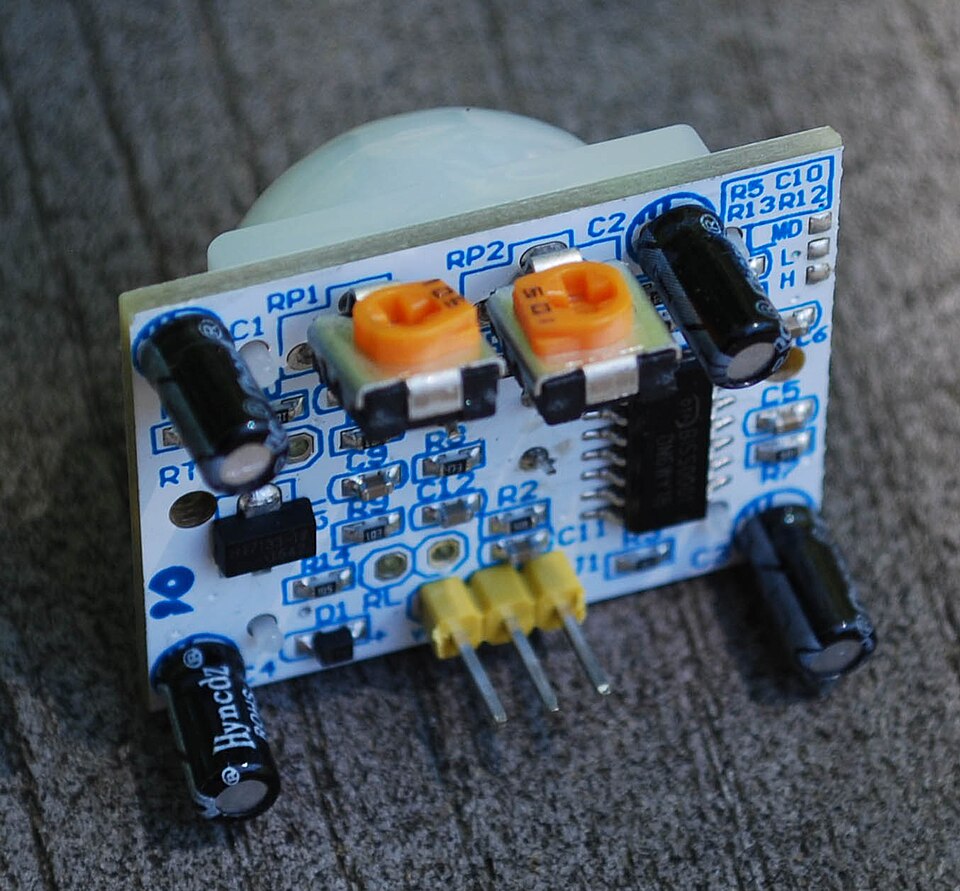
| Infrared (passive) | Measures heat radiation given off by an object. | Alarm detecting body heat; freezer temperature. |
| Pressure | A transducer: its current changes with the pressure applied. | Weighing lorries; gas pressure in a reactor. |
| Acoustic / sound | Basically a microphone: sound becomes electric signals. | Footsteps in a security system; dripping pipes. |
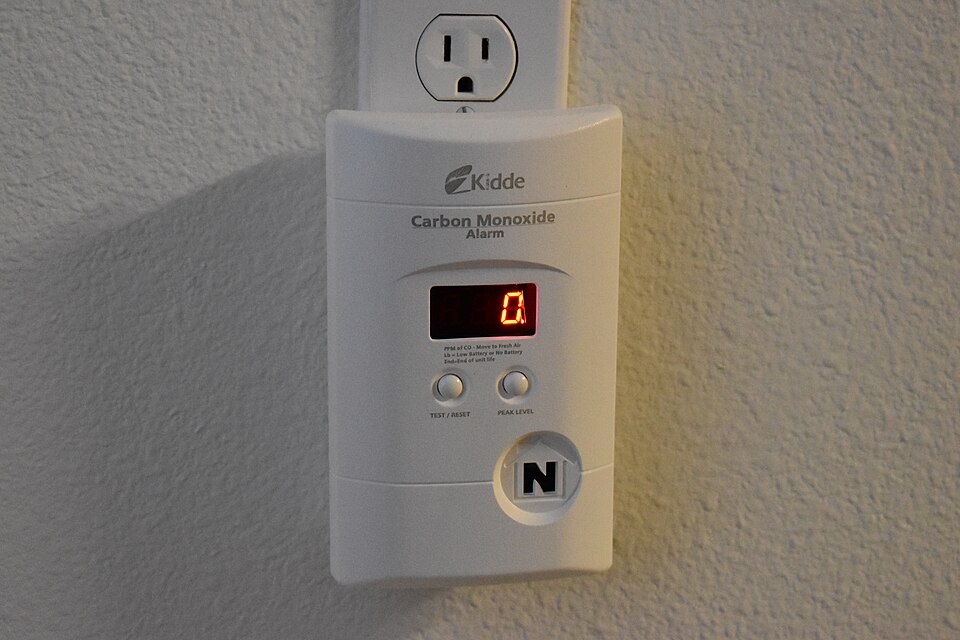
| Gas | Output varies with O₂ or CO₂ levels (other gases too). | Airport pollution; greenhouse; car exhaust. |
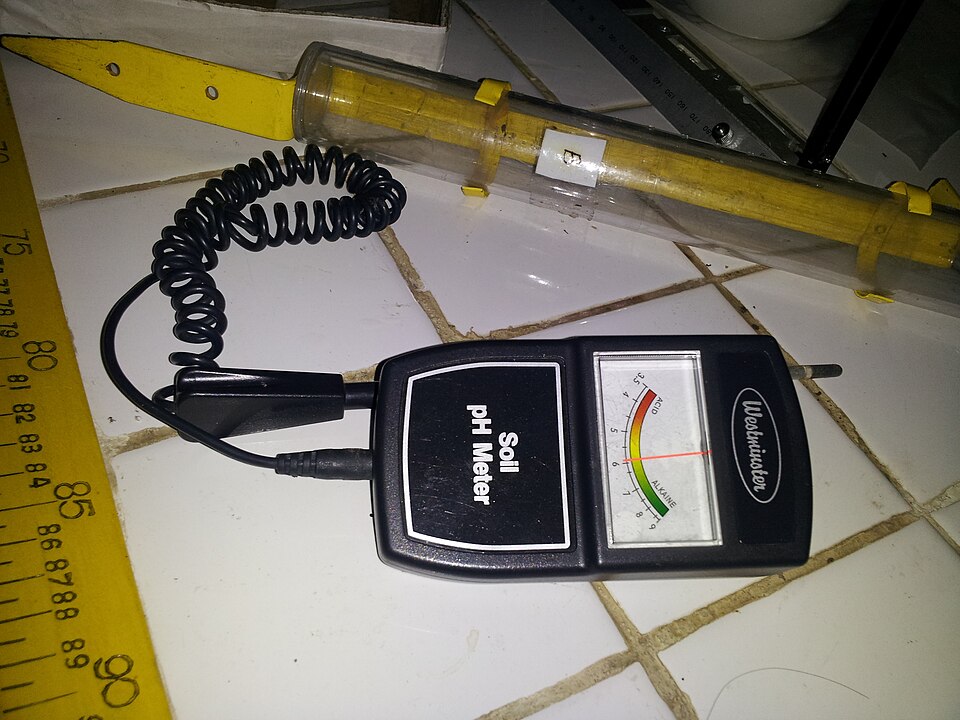
| pH | Measures acidity through changes in voltage. | Greenhouse soil; chemical process acidity. |
| Magnetic field | Output depends on changes in a magnetic field. | Anti-lock brakes (ABS); phones and CD players. |
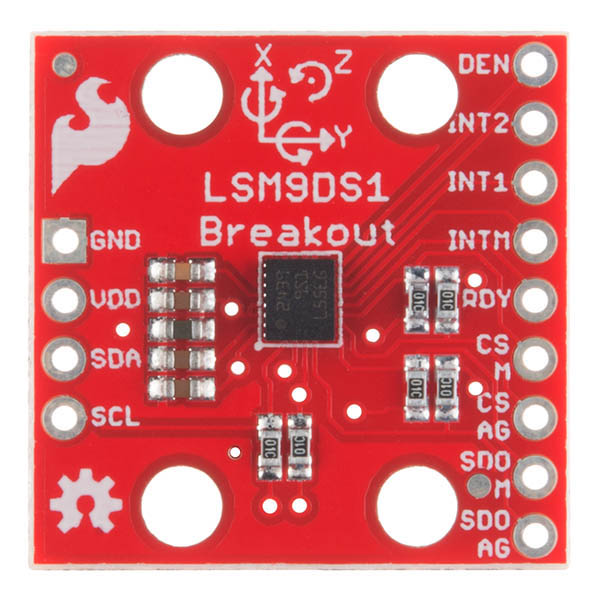
| Accelerometer | Measures acceleration / change in velocity (piezoelectric cell). | Airbags in a crash; phone portrait/landscape. |
| Proximity | Detects that an object is nearby. | Phone screen turns off when held to the ear. |
| Flow (rate) | Measures how fast a liquid or gas flows past it. | Hospital respiratory devices; gas pipes. |
| Level | Ultrasonic, capacitance, optical or mechanical sensing of level. | Car fuel tank; powder in tablet making; leaks. |
3 · Monitoring or control?
Both start the same way. They differ in what happens when a reading is out of range.
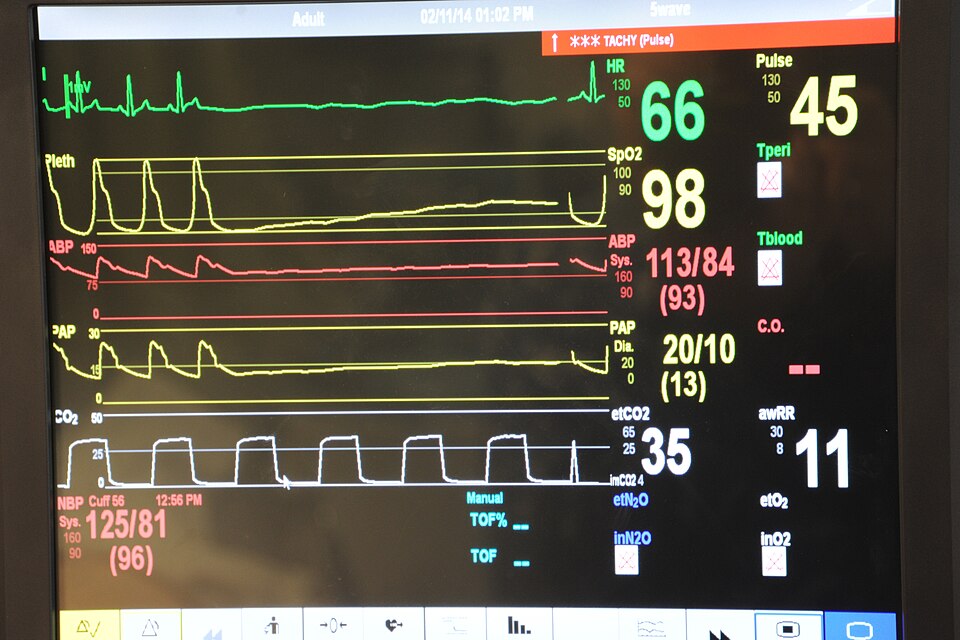
Monitoring examples
- A patient's vital signs in hospital.
- Intruders in a burglar alarm system.
- Temperature in a car engine.
- Pollution levels in a river.
Control examples
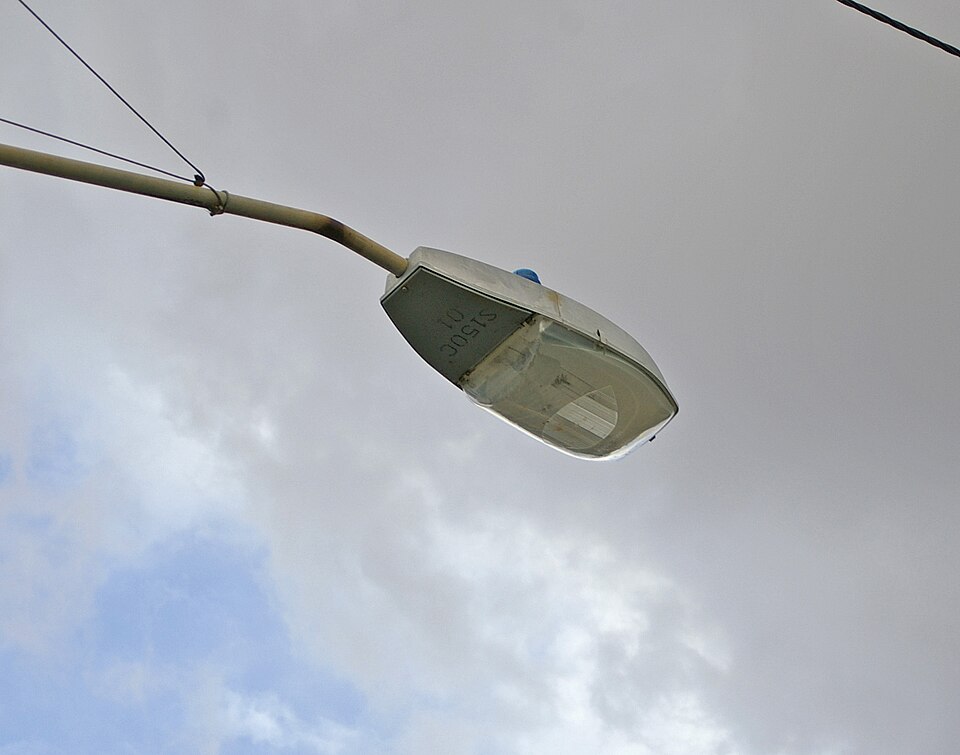
- Street lights on at dusk, off at dawn.
- Central heating / air conditioning.
- Chemical process temperature and pH.
- Anti-lock brakes; a greenhouse environment.
4 · Monitoring in action
5 · Control in action

Worked Example 12 min
(a) Central heating — the full description
- The owner keys in the required temperature; it is stored in memory as the pre-set value.every control answer needs a stored value to compare against.
- The temperature sensor constantly sends readings.name the sensor precisely — never "heat sensor".
- An ADC converts each analogue reading to digital and sends it to the microprocessor.the processor cannot use analogue data.
- The microprocessor compares the reading with the pre-set value.the most-awarded phrase in these questions.
- If reading ≥ pre-set: no action. If < pre-set: signals go, via a DAC, to an actuator to open the gas valve and to turn on the pump.give the condition and the action for both outcomes.
- The process repeats until the heating is switched off.the loop / feedback mark.
(b) Trace the chemical-process controller
Rules: temperature < 70 → heater ON, else OFF. pH > 3.5 → acid valve OPEN, else CLOSED.
| Sample | Temp (°C) | pH | Heater | Acid valve | Reason |
|---|---|---|---|---|---|
| 1 | 68 | 3.9 | ON | OPEN | too cold and not acidic enough |
| 2 | 71 | 3.6 | OFF | OPEN | warm enough; pH still > 3.5 |
| 3 | 72 | 3.5 | OFF | CLOSED | pH = 3.5 is not > 3.5, so close |
| 4 | 69 | 3.2 | ON | CLOSED | cooled below 70; acidic enough |
- Check each sensor against its own rule separately.two sensors means two independent decisions.
- Watch the boundaries: 70 °C turns the heater OFF; pH 3.5 closes the valve.the textbook uses < and ≥, > and ≤ — equality belongs to the "OFF/CLOSED" side.
- Sample 4 shows feedback: switching the heater off let the temperature fall, so it comes back on.the output changes the next input.
(c) The street lamp as Cambridge pseudocode
A light sensor is sampled; below the stored value, the lamp goes on. Either way, the lamp then holds its state for 30 minutes. That stops it flickering when a heavy cloud passes.
Pseudocode · street-lamp control
// Switch a street lamp using a light sensor
CONSTANT StoredLevel ← 40
DECLARE LightLevel : INTEGER
DECLARE SystemOff : BOOLEAN
SystemOff ← FALSE
REPEAT
  // reading already converted to digital by the ADC
  INPUT LightLevel
  IF LightLevel < StoredLevel
    THEN
      OUTPUT "Lamp ON"
    ELSE
      OUTPUT "Lamp OFF"
  ENDIF
  // hold for 30 minutes before sampling again
  CALL WaitMinutes(30)
  INPUT SystemOff
UNTIL SystemOff = TRUETry It Yourself 12 min
Goal: Name the best sensor for each: rain on a windscreen; a lorry's weight; a phone switching to landscape; a car's fuel tank; oxygen in a car exhaust; a phone held to your ear.
Goal: Sort into monitoring or control, with one sentence of reason each: patient heart rate; ABS brakes; river pollution; greenhouse windows; burglar alarm; air conditioning.
Goal: A car's air conditioning is run by a microprocessor. Describe how it works, naming at least two sensors and explaining the part played by feedback.
Hint
Use temperature and humidity sensors. Follow the central-heating steps: pre-set value, ADC, compare, signal an actuator (fan motor, cooling valve) via a DAC, repeat. Then say how the new air changes the next reading.
📝 Exam Practice 10 min
Explain what is meant by the term sensor.
Mark scheme
- An input device (1)…
- …that measures / reads a physical property (of its surroundings) and sends the data to a processor (1).
A farmer has a system that monitors the conditions for growing fruit. State two sensors that could be used and describe how each is used. (Based on Cambridge O Level CS 2210, Paper 12 Q9, Oct/Nov 2017.)
Mark scheme
- Per sensor, up to 3 marks — e.g. temperature sensor (1); readings sent to the processor and compared with stored values (1); an alert / warning if it is too hot or too cold (1).
- Second sensor, e.g. moisture (soil water) / humidity / light / pH (1); readings compared with the stored range (1); warning sent to the farmer if outside it (1).
- Do not accept actuator actions as this is a monitoring system.
Describe the main difference between control and monitoring of a process.
Mark scheme
- Monitoring only observes the process and warns / sounds an alarm; it has no effect on the process (1).
- Control sends signals to actuators to change the process; the output affects the next input (feedback) (1).
Describe how a microprocessor and a light sensor are used to control a street lamp.
Mark scheme
- The light sensor constantly sends data (1).
- An ADC converts it to digital before it reaches the microprocessor (1).
- The microprocessor compares the reading with a value stored in memory (1).
- If the reading is below the stored value, a signal is sent to switch the lamp on (1).
- If the reading is equal to or above it, a signal is sent to switch the lamp off (1).
- The lamp holds its state for a set time (e.g. 30 minutes) before sampling again / the process repeats (1).
🗝️ Recap & Key Terms 3 min
Sensors measure analogue quantities constantly; an ADC makes them digital. The processor compares readings with stored values. Monitoring only warns. Control drives actuators, often through a DAC, and the result feeds back into the next reading.
- Sensor
- An input device that reads or measures a physical property and sends the data to a processor.
- ADC (analogue-to-digital converter)
- Converts analogue data, e.g. from sensors, into digital data a computer can process.
- DAC (digital-to-analogue converter)
- Converts digital output into analogue signals that can drive motors, valves and other actuators.
- Monitoring system
- Uses sensors to watch a process and warn when values leave a range; it does not change the process.
- Control system
- Uses sensor readings to send signals to actuators that change the process.
- Feedback
- When the system's output affects the next input received, bringing the process back to its target values.
Homework 1 min
Task (≤ 15 min): Using the greenhouse example, describe how a pH sensor and a microprocessor keep the soil acidity at the right level. [5]
Model answer
- The pH sensor constantly sends readings of the soil's acidity (1).
- An ADC converts the readings to digital for the microprocessor (1).
- The microprocessor compares each reading with the pre-set pH value (1).
- If the pH is too high, a signal (via a DAC) opens a valve to add acid; if too low, a valve adds alkali (1).
- If equal, no action; readings continue and the new pH feeds back into the next comparison (1).