🎯 Syllabus & Goals 3 min
Cambridge 6.1 · Automated systems Paper 1 · Computer Systems
By the end of this lesson you can:
- Name the sensors in an automated weather station and explain the one actuator it uses.
- Describe automated systems in gaming, lighting and a science laboratory.
- Evaluate the advantages and disadvantages of each, including adding AI to automated systems.
Textbook: Chapter 6, §6.1.2 (pp. 225–229) — weather, gaming, lighting and science.
Recap / Warm-Up 5 min
So far: industry (Lesson 1), transport and farms (Lesson 2). Every example was the same loop. Today's four scenarios finish the syllabus list for automated systems.
Quick starter
Adaptive cruise control checks two things, in a fixed order. What are they?
Reveal the answer
First the distance to the vehicle in front (is it below the safe distance?). Only if the gap is safe does it compare the speed with the set speed.
🧠 Key Concept 14 min
1 · Automated weather stations
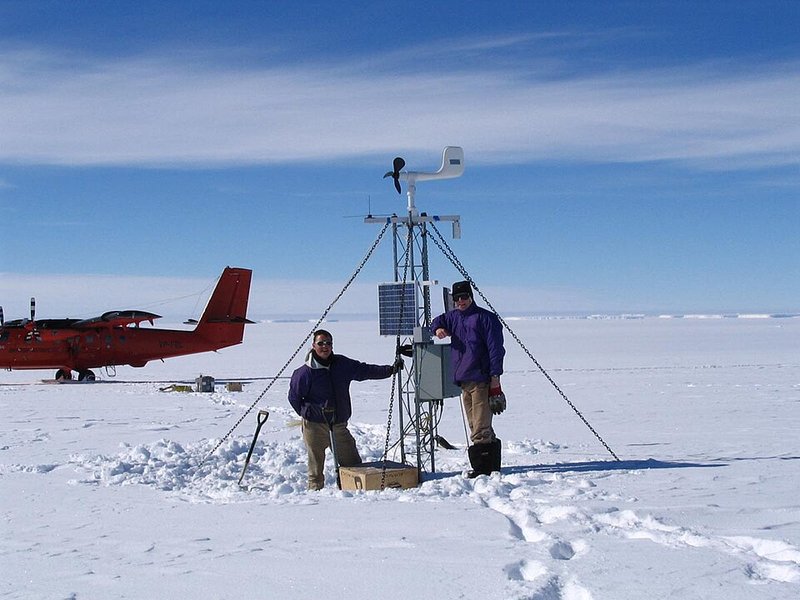
Weather stations are automated to save labour. They also reach remote places, and give constant data. Each needs a microprocessor, storage (a database), a battery (usually solar-charged) and a set of sensors.
| Sensor (instrument) | Measures |
|---|---|
| Thermometer / temperature sensor | Air temperature |
| Anemometer | Wind speed |
| Hygrometer | Humidity |
| Barometer / pressure sensor | Air pressure |
| Level sensor | Rainfall |
| Light sensor | Hours of daylight |
2 · The station's only actuator — the tipping bucket
3 · Gaming
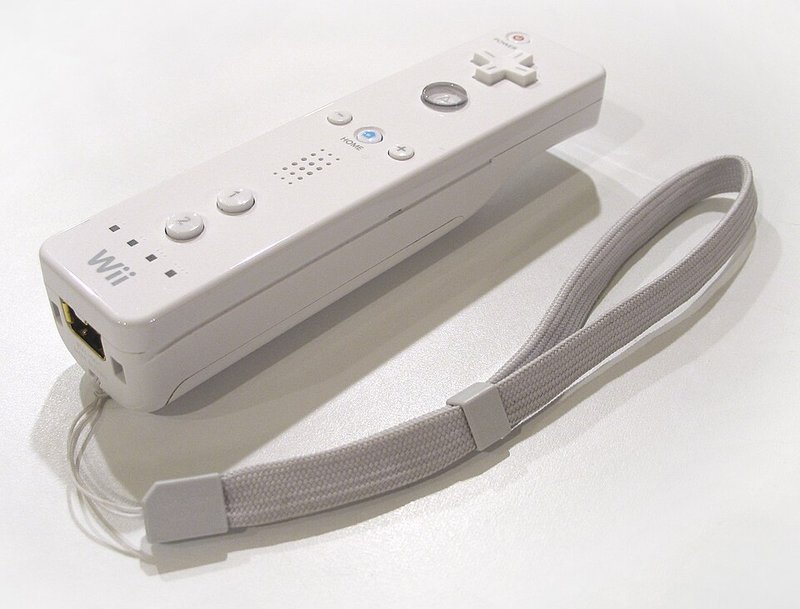
Sensors make games feel real. Embedded sensors plus a microcontroller let players act out real movements — a more immersive experience.
- Accelerometer — measures acceleration and deceleration, so it detects tilting forwards/backwards and side to side.
- Proximity sensor — electrodes in a touch pad detect where a hand or finger is.
Advantages (immersive gaming)
- More realistic, immersive play.
- Natural movements are easier to learn than buttons.
- Encourages physical activity.
Disadvantages (immersive gaming)
- Consoles and controllers cost more.
- Needs space; risk of injury or broken objects.
- Sensor faults or drift make controls unreliable.
4 · Lighting — a house and garden
Advantages (lighting)
- Lights are controlled automatically.
- Less energy used — lights on only when needed.
- Wireless links are safer (no trailing wires).
- Longer bulb life (dimming / switching off).
- New light displays can be programmed.
Disadvantages (lighting)
- Expensive to set up.
- Wireless links can be less reliable than wired.
- More maintenance for consistent performance.
5 · Science — an automated laboratory experiment
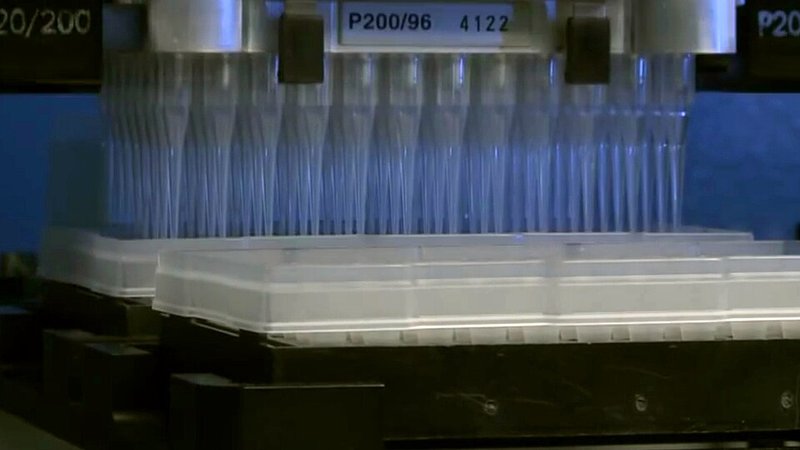
Two chemicals react. Chemical A drips from a burette into vessel B. When the reaction finishes, B turns bright orange. A microprocessor runs the whole thing.
Advantages (laboratory)
- More consistent, repeatable results.
- Less dangerous with hazardous chemicals.
- Faster — several experiments run at once.
- Results can be analysed automatically.
- Fewer highly trained staff per experiment.
- Monitored from anywhere in real time.
Disadvantages (laboratory)
- Less flexible than human technicians.
- Security risk if data is shared globally.
- Expensive equipment to buy and set up.
6 · Adding AI to automated systems
Many industrial and research systems now include AI (Lesson 7). The textbook lists general pros and cons:
- For: stores vast numbers of facts; learns from more data than humans could handle; spots patterns people miss.
- Against: the skills balance shifts (who controls the research — human or AI?); the AI is only as good as its training data.
Worked Example 12 min
(a) How the processor calculates "hours of daylight"
The light sensor is read once an hour. A reading of ≥ 40 (stored threshold) counts as daylight.
| Time | 04 | 05 | 06 | 07 | 08–17 | 18 | 19 | 20 | 21 |
|---|---|---|---|---|---|---|---|---|---|
| Reading | 2 | 18 | 41 | 77 | all > 90 | 70 | 44 | 21 | 3 |
| Daylight? | No | No | Yes | Yes | Yes ×10 | Yes | Yes | No | No |
- Compare every reading with the stored threshold 40.the processor decides by comparing with stored values — as always.
- Count the "Yes" readings: 06, 07, ten from 08–17, 18, 19 = 14.each reading stands for one hour.
- Store 14 hours of daylight in the central database with the date.the station stores calculated values as well as raw readings.
(b) Running the laboratory experiment
Pseudocode · add chemical A until vessel B turns orange
// The colorimeter returns the colour of vessel B
DECLARE Colour : STRING
DECLARE VolumeAdded : REAL
OUTPUT "Open tap"
REPEAT
  INPUT Colour
UNTIL Colour = "Orange"
OUTPUT "Close tap"
// level detectors give the volume used
INPUT VolumeAdded
OUTPUT "Volume of A needed: ", VolumeAdded
- The processor signals the tap actuator to open.OUTPUT here stands for a signal to an actuator.
- It reads the colorimeter again and again until B is orange.the loop is the continuous monitoring mark.
- It signals the actuator to close the tap, then reads the level detectors.the level sensors measure how much A was added.
- The volume is stored for automatic analysis.automatic analysis is one of the listed advantages.
Try It Yourself 12 min
Goal: Match each instrument to what it measures: anemometer, hygrometer, barometer, level sensor, light sensor, thermometer.
Goal: A greenhouse grows tomatoes. They need the right light, temperature and watering. Describe the sensors, actuators and processor decisions for all three. A human only supervises remotely.
Goal: An art gallery room shows a random coloured light display. It starts only when visitors walk in, and the room lights dim at the same time. Name the sensors, describe the processor and actuator actions, and give two advantages and two disadvantages.
Hint
An infrared / motion sensor detects visitors. The processor generates the random sequence and signals the display lights, and a dimmer for the room lights. Think about energy, reliability and cost.
📝 Exam Practice 10 min
Identify three sensors used in an automated weather station and what each measures.
Mark scheme
- 1 mark per correct pair, max 3: temperature sensor – temperature · anemometer – wind speed · hygrometer / humidity sensor – humidity · barometer / pressure sensor – air pressure · level sensor – rainfall · light sensor – hours of daylight.
A hand-held console is tilted to steer a racing car on screen. Name two sensors it would use and describe what each does.
Mark scheme
- Accelerometer (1)…
- …measures acceleration/deceleration, so it detects tilting forwards/backwards/sideways to steer or change speed (1).
- Proximity sensor (1)…
- …detects the position of the player's finger/hand on the touch pad / screen (1).
Describe how garden lights are switched on automatically when it gets dark.
Mark scheme
- A light sensor measures the light level continuously (1).
- Data is sent to the microprocessor (via an ADC) (1).
- Microprocessor compares the reading with a stored value (1).
- If below the stored value, it sends a signal (via an interface / actuator) to switch the lights on; otherwise off (1).
A drug company automates its laboratory experiments. Explain two advantages and two disadvantages.
Mark scheme
- Advantage: more consistent / repeatable results, as every run is identical (1).
- Advantage: safer with hazardous chemicals / faster, several experiments at once / automatic analysis / monitored remotely (1).
- Disadvantage: less flexible than a human technician when something unexpected happens (1).
- Disadvantage: expensive to buy and set up / security risk when data is shared (1).
🗝️ Recap & Key Terms 3 min
Weather stations mostly monitor; their one actuator tips the rain bucket. Games use accelerometers and proximity sensors. Lighting uses light and infrared sensors to save energy. Laboratories automate for consistency and safety.
- Accelerometer
- A sensor that measures acceleration and deceleration and can detect the orientation (tilt) of a device.
- Proximity sensor
- A sensor that detects how close an object, hand or finger is.
- Anemometer / hygrometer / barometer
- Sensors that measure wind speed / humidity / air pressure.
- Colorimeter
- An instrument that measures the colour of a liquid, used here to detect when a reaction is complete.
- Monitoring vs control
- Monitoring only takes and stores readings; control also uses actuators to change the process.
Homework 1 min
Task (≤ 15 min): Explain how an automated weather station measures rainfall, and give two reasons it suits a remote mountain site. [5]
Model answer
- Rain collects in a bucket over a pre-set time interval (1).
- The microprocessor sends a signal to an actuator / piston that tips the bucket (1).
- Water goes into a vessel where level sensors measure the amount (1).
- No staff are needed on site / it saves labour in a place that is hard to reach (1).
- It gives constant, frequent readings 24/7, powered by a solar-charged battery (1).