🎯 Syllabus & Goals 3 min
Cambridge 6.2 · Robotics Paper 1 · Computer Systems
By the end of this lesson you can:
- Define robotics and give examples of robots in factories, homes and the air (drones).
- Describe the three characteristics a device needs to be called a robot.
- Distinguish independent from dependent robots, and physical robots from software "bots".
Textbook: Chapter 6, §6.2.1–6.2.2 (pp. 230–231).
Recap / Warm-Up 5 min
Section 6.1 showed automated systems: sensors, a processor and actuators in a loop. A robot uses exactly those parts — but packed into one mechanical machine that can move.
Quick starter
An automatic weather station has sensors, a microprocessor and one actuator. Why is it not usually called a robot?
Reveal the answer
It is not a mechanical machine built to move and carry out tasks. It mainly monitors. A robot has a mechanical structure that moves (wheels, arms, grippers) to do physical work.
🧠 Key Concept 14 min
1 · What is robotics?
| Where | Examples of robots |
|---|---|
| Factories | Welding parts; spray-painting car panels; fitting windscreens; precision metal cutting; bottling and labelling; finding items in warehouses. |
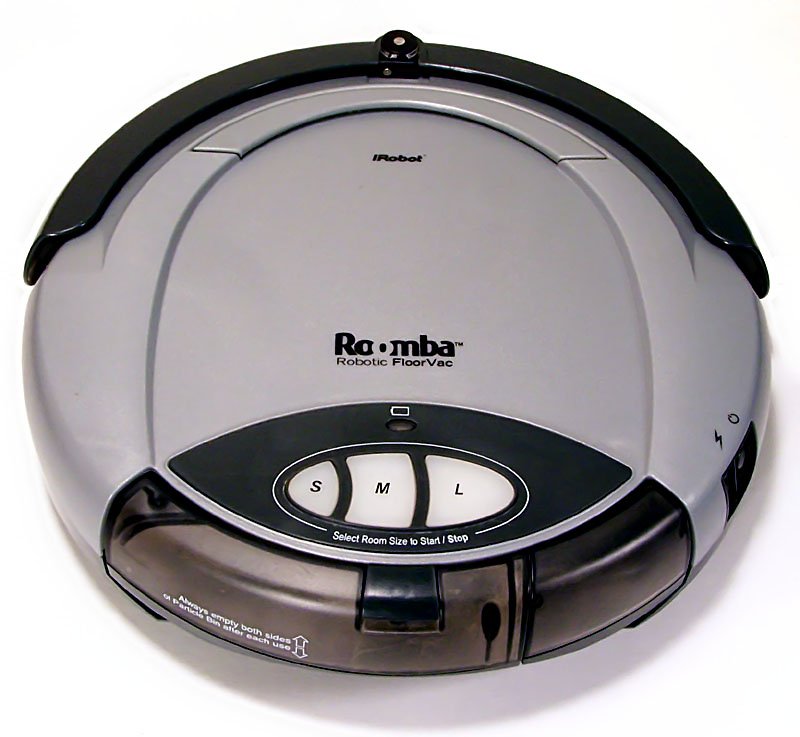
| The home | Autonomous floor sweepers and lawn mowers; ironing robots; pool and window cleaners; "friend" robots for entertainment. |
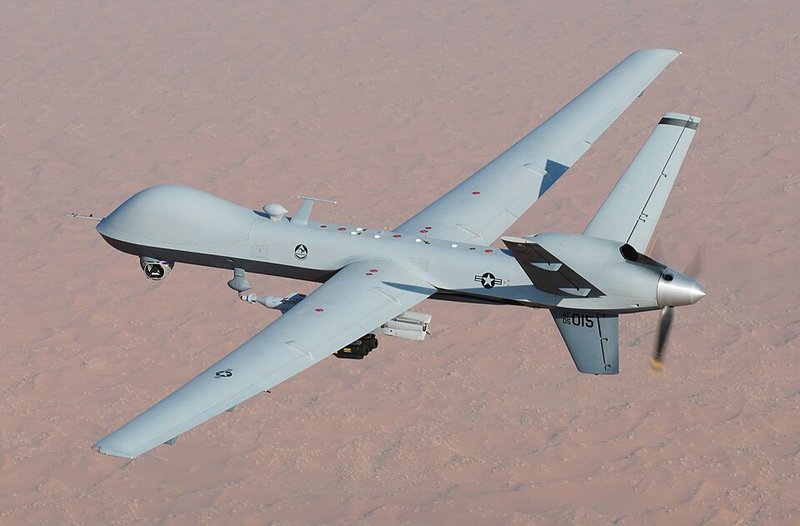
| Drones | Unmanned aerial vehicles (UAVs), remote-controlled or fully autonomous; aerial reconnaissance photos; parcel deliveries. |
2 · The characteristics of a robot
The textbook and the syllabus word these slightly differently. Learn both — they describe the same three ideas.
| Textbook wording | Syllabus wording | What it means |
|---|---|---|
| Ability to sense its surroundings | Electrical components — sensors | Light, pressure, temperature, acoustic sensors, cameras. They detect size, shape, weight, heat… and send data to the processor. |
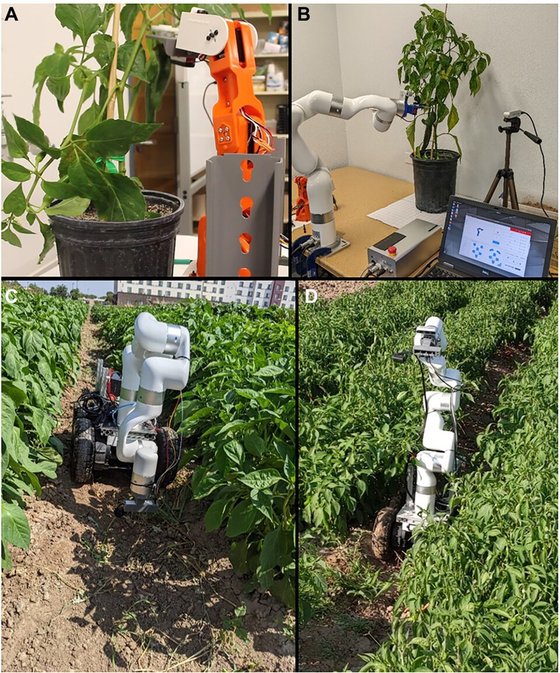
| Has a degree of movement | Mechanical structure or framework + actuators | Wheels, cogs, gears, pistons, motors, hydraulics. It can turn, twist, grip, lift. End-effectors fit specific tools. |
| Programmable | Programmable (microprocessor / controller) | A "brain" called a controller decides actions using sensor data, and can be programmed for new tasks. |
3 · Robots are not the same as AI — and bots are not robots
- WebCrawler / search bot — software that roams the internet, scanning and categorising websites for a search engine.
- Chatbot — a pop-up program on a website that seems to hold a conversation with the user.
4 · Independent and dependent robots
Independent robot
- No direct human control — it is autonomous.
- Can replace the human activity totally.
- Example: an autonomous vehicle; a robot lawn mower.
Dependent robot
- A human interfaces with it directly (computer or control panel).
- Supplements rather than replaces the human activity.
- Example: a car assembly line where humans and robots work side by side.
Worked Example 12 min
(a) "Is it a robot?" — apply the three-characteristic test
| Device | Senses? | Moves (mechanical)? | Programmable? | Robot? |
|---|---|---|---|---|
| Robot floor sweeper | ✔ proximity sensors, camera | ✔ wheels driven by motors | ✔ user sets schedules | Yes |
| Remote-control toy car | ✘ none | ✔ wheels | ✘ human drives every move | No |
| Search-engine web crawler | ✘ (reads web pages) | ✘ no body | ✔ | No — software bot |
| Welding arm in a car factory | ✔ sensors check a car is present | ✔ jointed arm + welder end-effector | ✔ taught a sequence | Yes |
- Check sensing: does it gather data from its surroundings with sensors?a toy car with no sensors fails at once.
- Check movement: does it have a mechanical structure that moves?the crawler fails here — it is software only.
- Check programmable: does a controller decide the actions?a remote-control car is driven, not programmed.
- Only a "✔ ✔ ✔" device is a robot.all three characteristics are needed.
(b) Independent or dependent?
- Robot lawn mower — cuts the lawn alone, no human at the controls → independent.it replaces the human task totally.
- Bomb-disposal robot — an operator steers it from a control panel → dependent.a human interfaces with it directly.
- Parcel drone flying a set route by GPS → independent.no direct human control during the flight.
- Assembly-line arm working beside humans → dependent.it supplements, not replaces, the workers.
Try It Yourself 12 min
Goal: List three factory robots, three home robots and two uses of drones.
Goal: For a robot lawn mower, describe two features that show each characteristic: senses, moves, programmable.
Goal: A rover explores Mars. Radio messages take minutes to arrive from Earth. Explain why it must be an independent robot, and describe how it meets all three robot characteristics.
Hint
A long signal delay means nobody can steer it in real time. Think cameras and proximity sensors; wheels and a sampling arm with end-effectors; a programmable controller.
📝 Exam Practice 10 min
Give three characteristics needed to define a machine as a robot.
Mark scheme
- It can sense its surroundings / has sensors (1).
- It has a mechanical structure / framework that can move (e.g. wheels, arms, end-effectors) (1).
- It is programmable / has a controller (microprocessor) (1).
Robots can be described as dependent or independent. Explain what is meant by the two types.
Mark scheme
- Independent: no direct human control / autonomous (1).
- Independent: can replace the human activity totally (1).
- Dependent: a human interfaces directly with it, e.g. via a computer or control panel (1).
- Dependent: supplements rather than replaces human activity (e.g. humans and robots on an assembly line) (1).
A chatbot and a web crawler are sometimes called "bots". Explain why neither is a true robot.
Mark scheme
- They are software only / programs (1).
- They have no mechanical structure and cannot physically move (1).
- They do not sense their physical surroundings with sensors (1).
Describe what is meant by an end-effector.
Mark scheme
- An attachment / tool fitted to the end of a robot arm (1).
- …allowing it to do a specific task, e.g. welding, spraying, cutting, gripping (1).
🗝️ Recap & Key Terms 3 min
A robot senses, moves and is programmable. Robots work in factories, homes and the sky. Most have no AI, and software bots are not robots. Independent robots replace people; dependent robots work alongside them.
- Robotics
- The branch of (computer) science covering the design, construction and operation of robots.
- Robot
- A mechanical device that can carry out tasks normally done by humans.
- End-effector
- An attachment to a robot arm that lets it do a specific task, such as spray painting.
- Controller
- The programmable microprocessor ("brain") that decides a robot's actions.
- Autonomous
- Able to operate independently without any human input.
- Drone
- A flying robot, autonomous or remote-controlled, used for reconnaissance or deliveries.
Homework 1 min
Task (≤ 15 min): A warehouse robot drives along the aisles, finds boxes with a camera and lifts them with a gripper. Explain how it shows each of the three characteristics of a robot. [6]
Model answer
- Senses: a camera / barcode reader identifies the right box (1)…
- …and proximity sensors stop it hitting people or shelves (1).
- Moves: wheels driven by motors / actuators carry it along the aisles (1)…
- …and a gripper end-effector lifts the boxes (1).
- Programmable: a controller decides the route and actions from sensor data (1)…
- …and can be reprogrammed for new layouts or tasks (1).