🎯 Syllabus & Goals 3 min
Cambridge 6.2 · Robotics — roles, advantages & disadvantages Paper 1 · Computer Systems
By the end of this lesson you can:
- Describe the two ways an industrial robot is programmed, and why it still needs sensors.
- Describe how autonomous cars, trains and aircraft use sensors, microprocessors and actuators.
- Explain the advantages and disadvantages of robots in industry and transport.
Textbook: Chapter 6, §6.2.3 (pp. 232–236) — industry and transport.
Recap / Warm-Up 5 min
A robot senses, moves and is programmable. Independent robots act alone; dependent robots work with a human. Today: where they earn their keep.
Quick starter
A spray-painting arm swaps its spray gun for a welding torch. What is the swapped part called?
Reveal the answer
An end-effector — an attachment that lets the arm do one specific task.
🧠 Key Concept 14 min
1 · Robots in industry
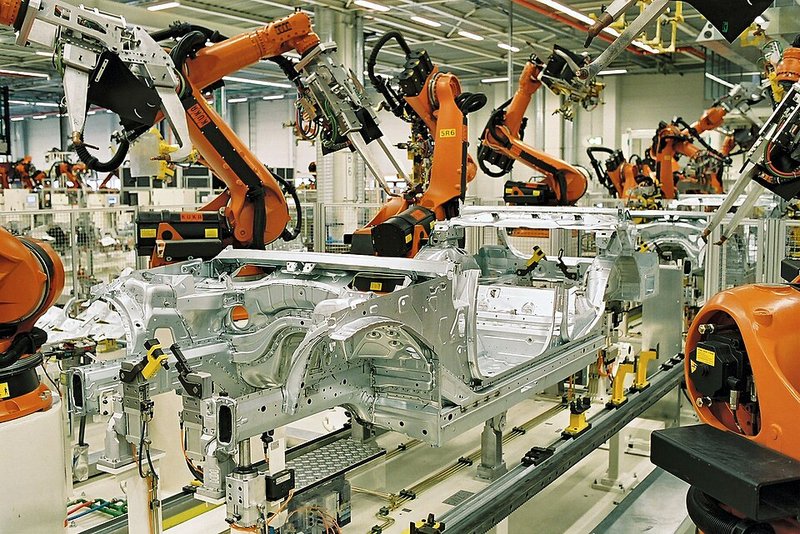
Industrial robots range from heavy lifting to delicate work: spraying car bodies, welding, making microchips and electrical goods, and running automatic warehouses. They are controlled by embedded microprocessorsor by a linked computer.
2 · Two ways to program an industrial robot
Industrial robots — advantages
- Work in conditions hazardous to humans.
- Work 24/7 without stopping.
- Cheaper in the long run (fewer salaries).
- Higher productivity than humans.
- More consistent (not necessarily more accurate).
- Suit boring, repetitive tasks — fewer mistakes.
- Less spent on heating and lighting.
Industrial robots — disadvantages
- Struggle with non-standard tasks (e.g. a cracked windscreen).
- Higher unemployment in manual jobs.
- Deskilling — e.g. welding and spray painting skills lost.
- Factories can move abroad to cheaper places.
- Expensive to buy and set up.
3 · Autonomous (driverless) cars
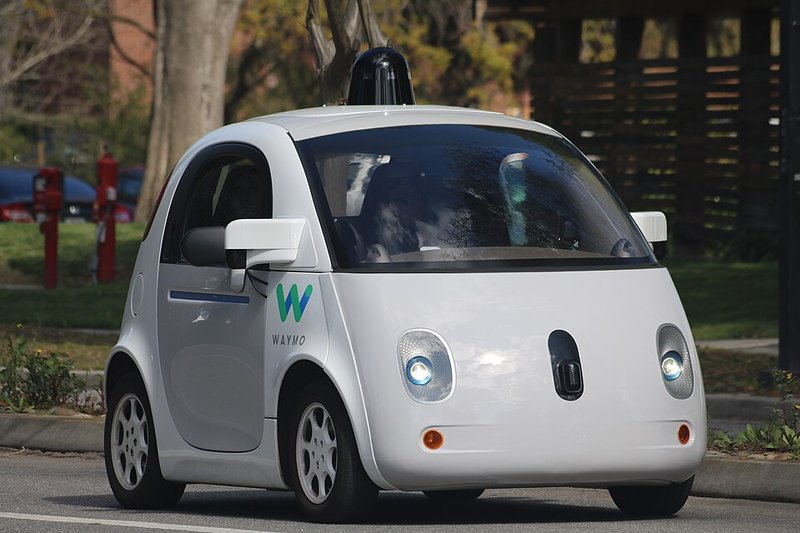
Driverless vehicles are very complex robots. The biggest hurdle is not technology — it is human trust. They use sensors, cameras, actuators and microprocessors running complex algorithms.
Autonomous vehicles — advantages
- Safer — human error removed, fewer accidents.
- Better for the environment — more efficient driving.
- Less congestion — smooths out "phantom" stop-go jams.
- Increased lane capacity and average speeds.
- Reduced travel and commuting times.
- Stress-free parking — the car finds a space and parks.
Autonomous vehicles — disadvantages
- Very expensive to set up.
- Fear of hacking into the control system.
- Software glitches could be catastrophic; updates need tight control.
- Must be well maintained — dirty cameras, snow blocking radar.
- Driver and passenger reluctance.
- Unemployment, e.g. taxi drivers.
4 · Autonomous trains
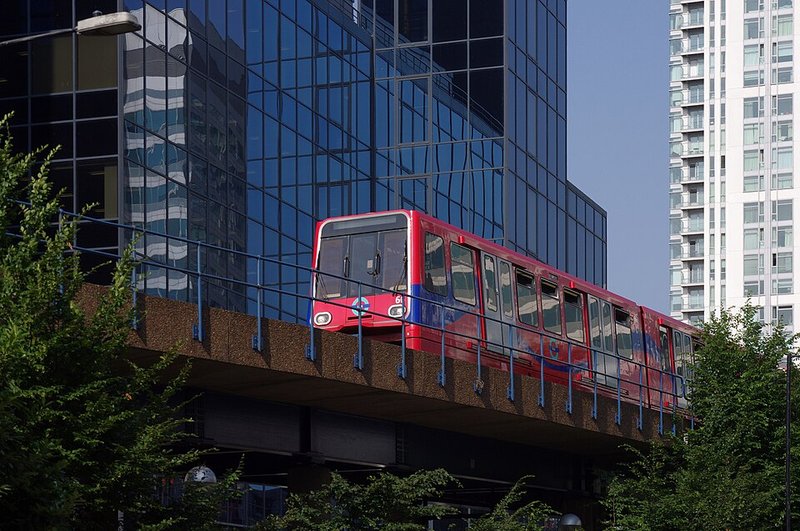
Driverless trains have run in many cities for years. People accept them more easily, since trains follow a fixed track and never overtake. They use LiDaR, proximity sensors on doors, cameras (including infrared) and GPS. Actuators control speed, braking and the doors.
Autonomous trains — advantages
- Better punctuality.
- Lower running costs (fewer staff).
- Safer — human error removed.
- Less energy: smoother speed control.
- More frequent trains; easier to change schedules.
Autonomous trains — disadvantages
- Fear of hacking.
- Does not yet cope well with very busy services.
- High capital and set-up costs (trains, signalling, training).
- Passenger behaviour: doors jammed open, standing too near the edge.
- Passenger reluctance; CCTV needed at stations.
5 · Autonomous (pilotless) aircraft
Autopilots already fly most of a journey; humans handle take-off and landing. A pilotless aircraft would add: sensors to detect turbulence; much more self-testing of circuits; sensors to detect cabin depressurisation; GPS for navigation and speed; actuators on the throttle, flaps and rudder.
| Pilotless aircraft — advantages | Pilotless aircraft — disadvantages |
|---|---|
| Smoother, more comfortable flights | Security — no crew to handle a terrorist attack |
| Lower running costs (fewer staff) | In-flight emergencies may be hard to deal with |
| Safer — most crashes involve pilot error | Hacking into the flight controls |
| Better aerodynamics — no cockpit needed | Passenger reluctance; software glitches can be devastating |
Worked Example 12 min
(a) An autonomous car meets a red traffic light
- Cameras capture the traffic light; the control system recognises it as red.sensing comes first — name the sensor (camera).
- The microprocessor checks its database for the action: stop.decisions come from stored data, not from the camera.
- It signals actuators to apply the brakes and put the gear into park.name the physical action.
- It keeps monitoring the light and every sensor.continuous monitoring is a mark in every control answer.
- On green, it checks the path is clear (broken-down car? pedestrian?), then selects first gear, releases the brakes and opens the throttle.safety check before moving off shows full understanding.
(b) Building a 6-mark "advantages and disadvantages" answer
- Aim for 3 + 3: the question says "and", so both sides must appear.one-sided answers are usually capped at 4.
- Advantage + reason: "Human error is removed, so the service is safer."Explain = point + because.
- Advantage + reason: "Computers control speed smoothly, so less energy is used."
- Advantage + reason: "Shorter gaps are possible, so trains run more frequently."
- Disadvantage + reason: "The control system could be hacked, putting passengers at risk."
- Disadvantage + reason: "High set-up cost for new trains and signalling." / "Passengers may refuse to use it."every point must fit trains — a generic "robots are expensive" is weaker.
Try It Yourself 12 min
Goal: Sort into advantage / disadvantage of industrial robots: works 24/7 · deskilling · consistent · expensive to set up · less heating and lighting · struggles with non-standard tasks.
Goal: An autonomous car approaches a pedestrian crossing as a child steps out. Describe, step by step, what the sensors, microprocessor and actuators do.
Goal: Evaluate replacing a city's entire taxi fleet with autonomous cars. Reach a reasoned conclusion.
Hint
Weigh safety, congestion and cost against hacking, unemployment and public trust. "Evaluate" needs a final judgement — e.g. phase it in gradually.
📝 Exam Practice 10 min
Describe two ways a robot arm can be programmed to spray-paint a car body.
Mark scheme
- A programmer writes a sequence of instructions for the robot to follow (1)…
- …which it then carries out automatically (1).
- A worker guides the robot arm by hand / wears sensors on their own arm while spraying (1)…
- …each movement is stored as instructions on the computer and repeated identically (1).
A factory replaces its welders with robots. Explain three advantages and three disadvantages.
Mark scheme
- Max 3 advantages (1 each): work 24/7 without breaks · higher productivity · consistent welds · safe in hazardous conditions · cheaper long-term (fewer wages) · less heating/lighting.
- Max 3 disadvantages (1 each): expensive to buy/set up · unemployment for welders · deskilling · cannot cope with non-standard tasks · factory may relocate abroad.
Describe how sensors and actuators are used in an autonomous train.
Mark scheme
- LiDaR / lasers build a 3D image of the surroundings (1).
- Proximity sensors on doors / (infrared) cameras detect passengers and obstacles (1).
- GPS lets the computer calculate position, speed and direction changes (1).
- Actuators control speed / braking / opening and closing the doors (1).
State two disadvantages of pilotless passenger aircraft.
Mark scheme
- Any two (1 each): emergencies hard to handle · no crew in a terrorist attack · hacking of flight controls · passenger reluctance · software glitches.
🗝️ Recap & Key Terms 3 min
Industrial robots are programmed or taught by demonstration, then repeat identically. Driverless cars, trains and aircraft pair sensors (radar, ultrasonics, cameras, LiDaR, GPS) with actuators. The trade-off is always safety and efficiency against cost, hacking, jobs and trust.
- Autonomous vehicle
- A vehicle that moves from A to B without any input from a driver or pilot.
- LiDaR
- Light detection and ranging — lasers used to build a 3D image of the surroundings.
- GPS
- Satellite positioning used to calculate accurate position, speed and direction changes.
- Deskilling
- The loss of human skills when robots take over a task.
- Consistency
- Doing a task identically every time — a robot strength, distinct from accuracy.
Homework 1 min
Task (≤ 15 min): An online shop's warehouse uses robots to find items by barcode, pack them and load delivery vans. Describe the advantages and disadvantages to the company. [5]
Model answer
- Robots work 24/7, so orders are packed faster / higher productivity (1).
- Fewer wages to pay, so cheaper in the long run (1).
- Consistent packing; fewer wrong items picked (1).
- Expensive to buy, install and maintain the robots (1).
- Robots struggle with non-standard items (odd shapes, damaged barcodes) / staff unemployment affects reputation (1).